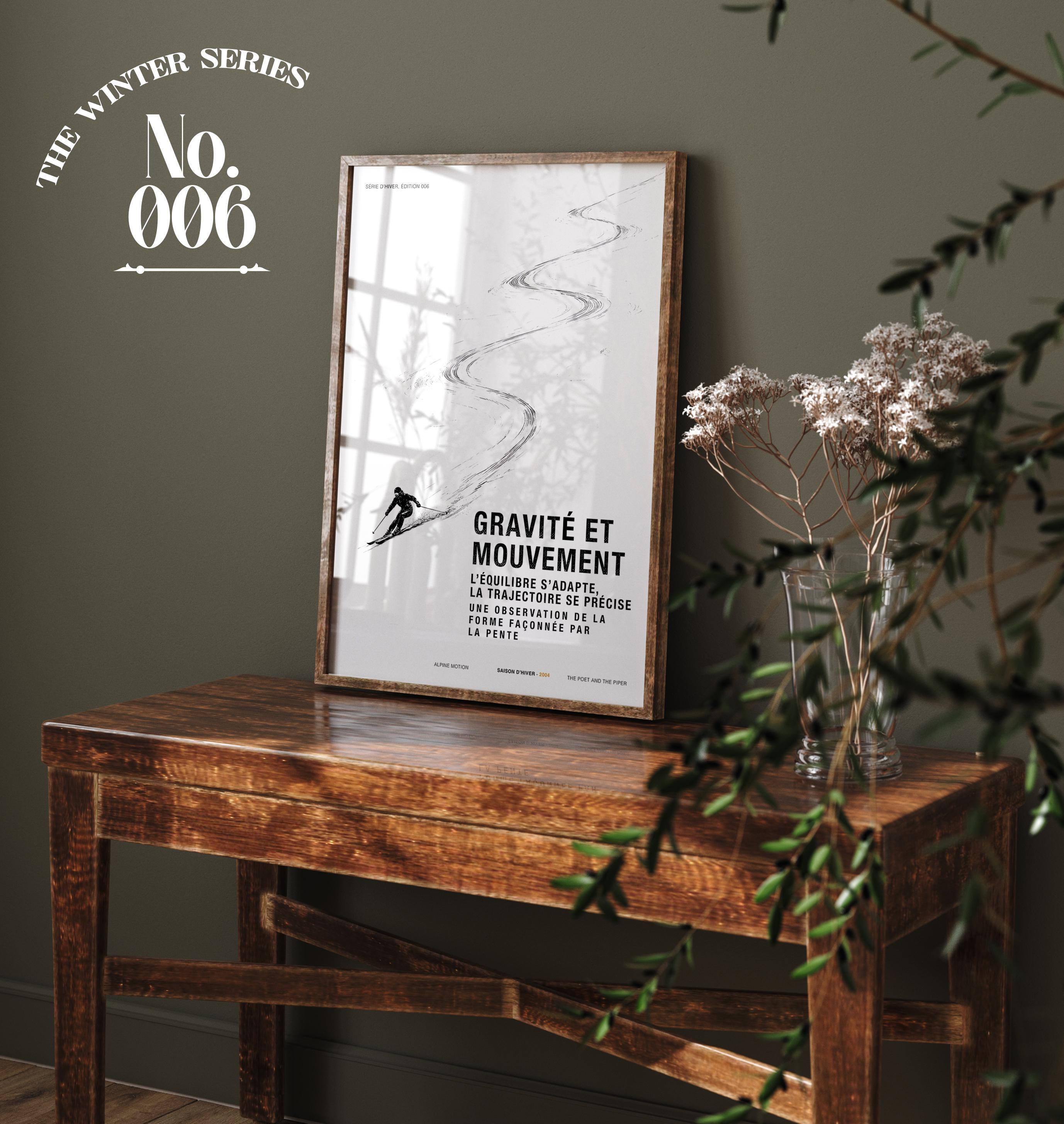
I’ve been skiing since I was eight years old. Long before I understood technique or terrain, I learned something quieter, how to read a mountain.
You don’t read it like a map. You read it through light and shadow, through fall line and rhythm, through the way other skiers have already passed through it. A slope is never blank for long. It becomes a surface shaped by intention.
That idea sits at the heart of this print series.
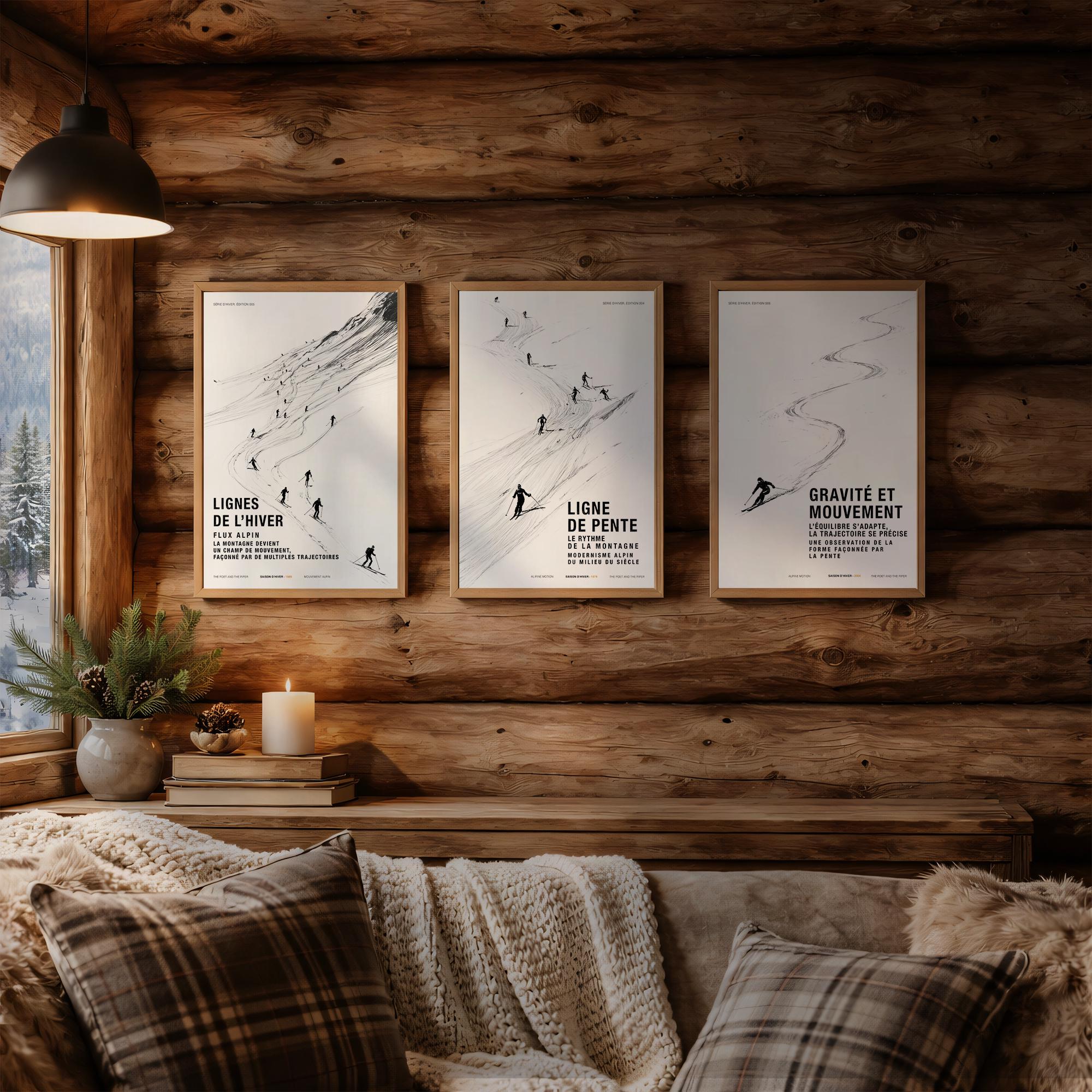
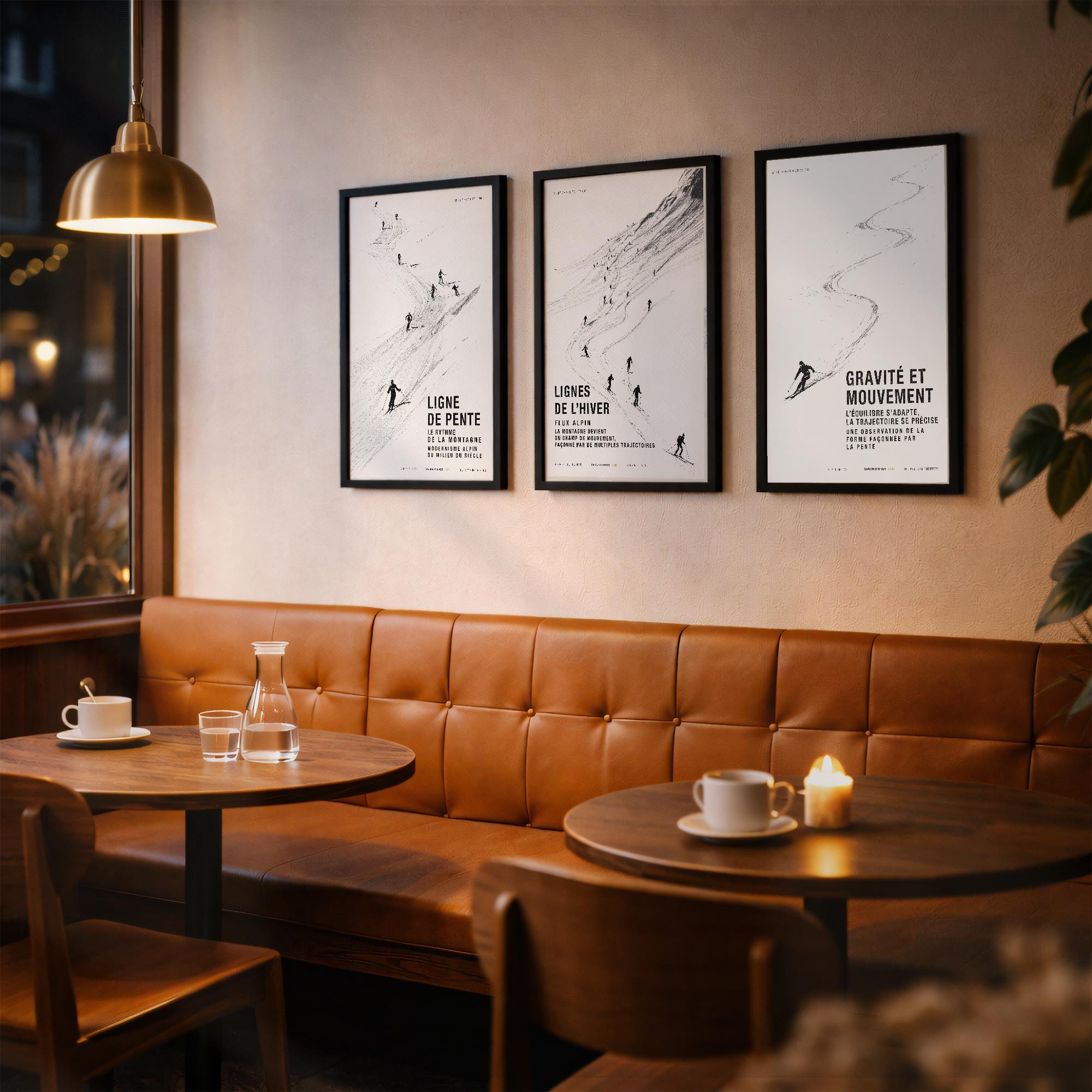
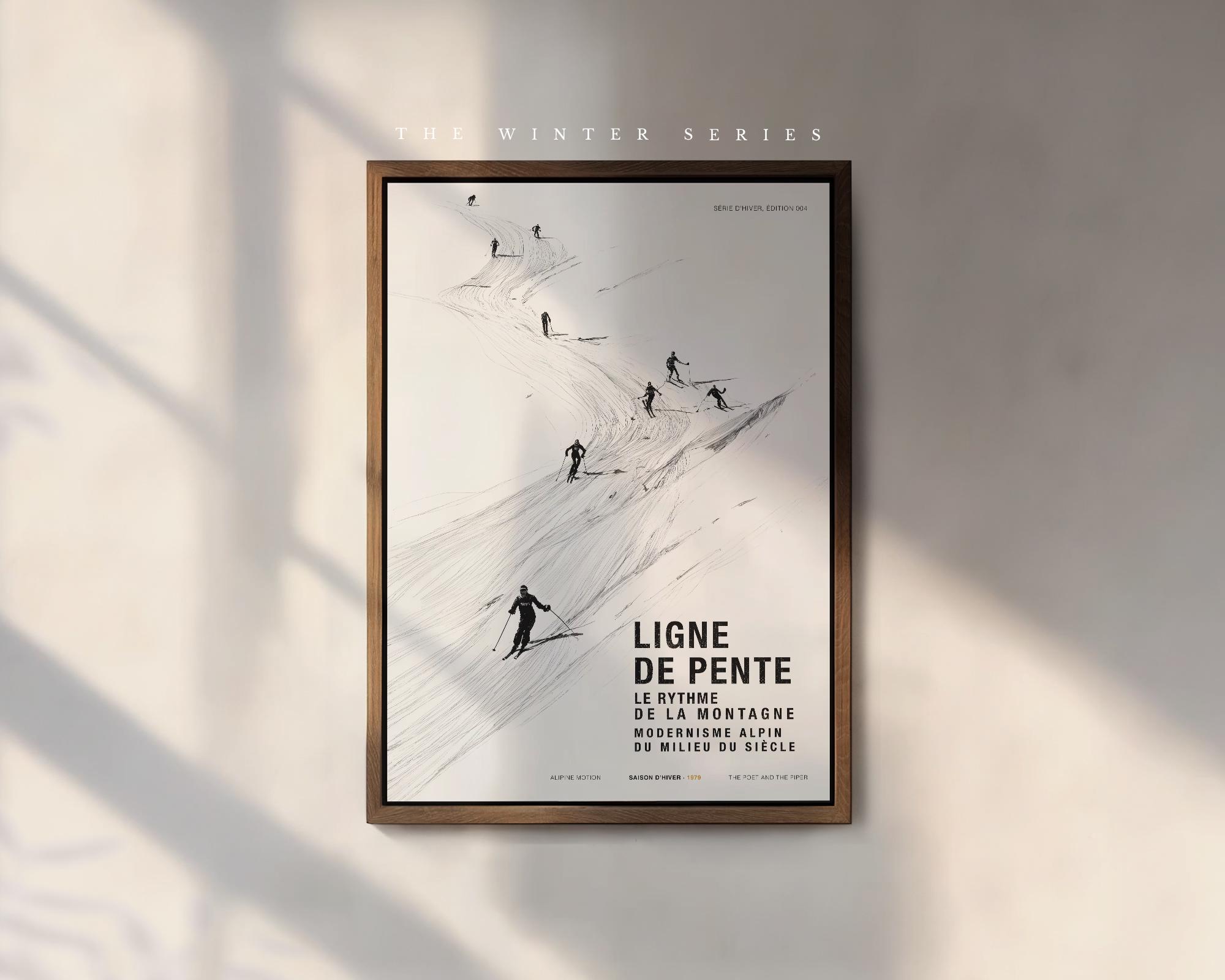
Lignes de l’Hiver, Ligne de Pente, Gravité et Mouvement, aren’t illustrations of skiing in the traditional sense. They’re observations.
The skiers are reduced to scale, sometimes almost incidental. What matters are the lines they leave behind.
This approach was heavily influenced by early-1990s editorial design magazines that trusted contrast and restraint. Black ink on white space. Photography and layout that allowed the viewer to pause, rather than rush through.
At the same time, these pieces echo something much older: mid-century alpine event posters, where a single slope or gesture could carry the whole composition. No excess detail. No narrative spelled out.
When I look at these prints, I’m reminded of standing at the top of a run in the Alps, watching others drop in before me. The mountain slowly fills with trajectories, each one different, each one temporary.
These prints are about that moment.
Before speed.
Before noise.
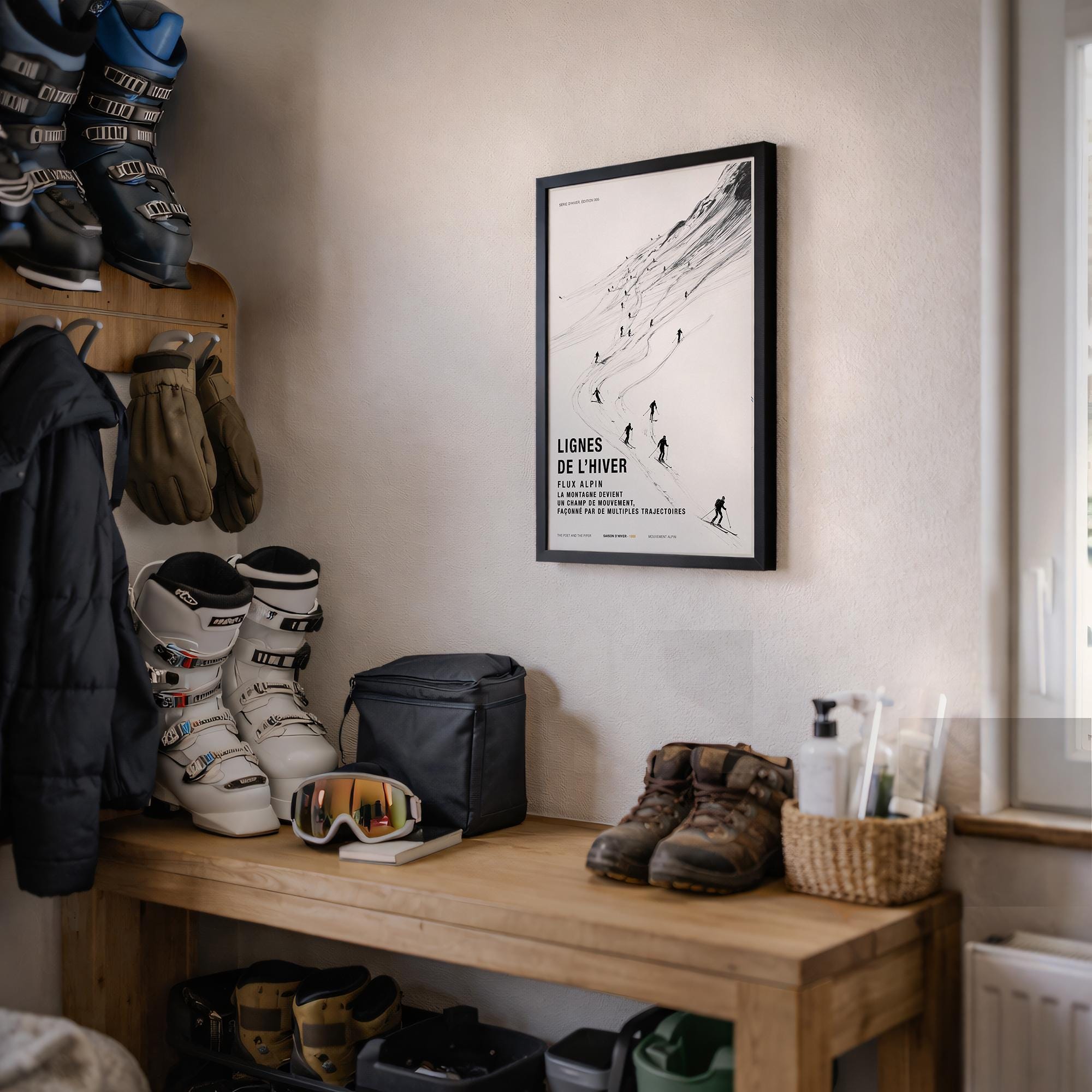
When the mountain captures your soul.