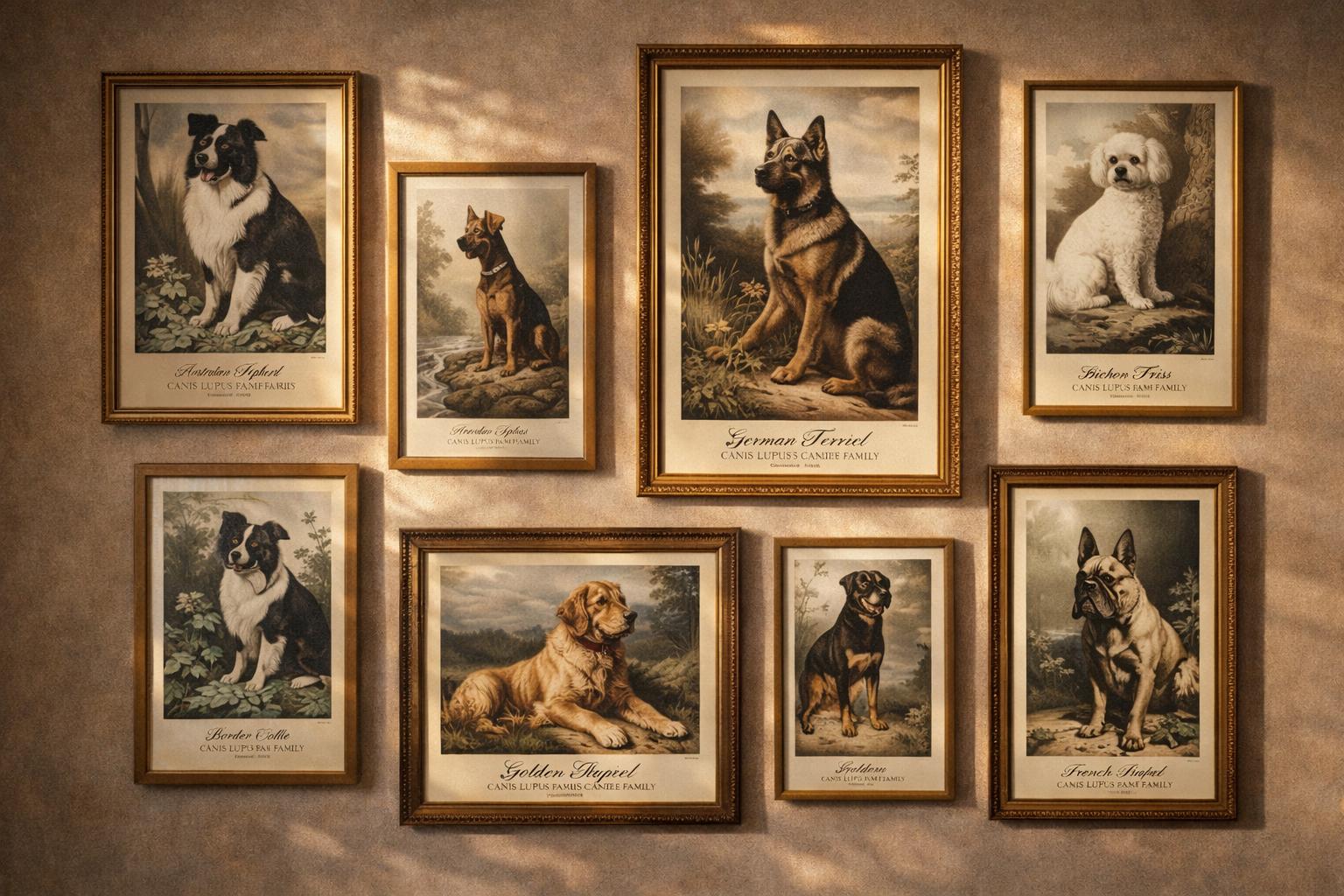
There is something deeply reassuring about vintage pet portraits. Long before photographs were commonplace, people chose illustration as a way to honour the animals who shared their lives.
Dogs especially, were painted with patience and care, often seated calmly in landscapes or domestic settings, as if simply being themselves was enough to deserve preservation.
A portrait without performance
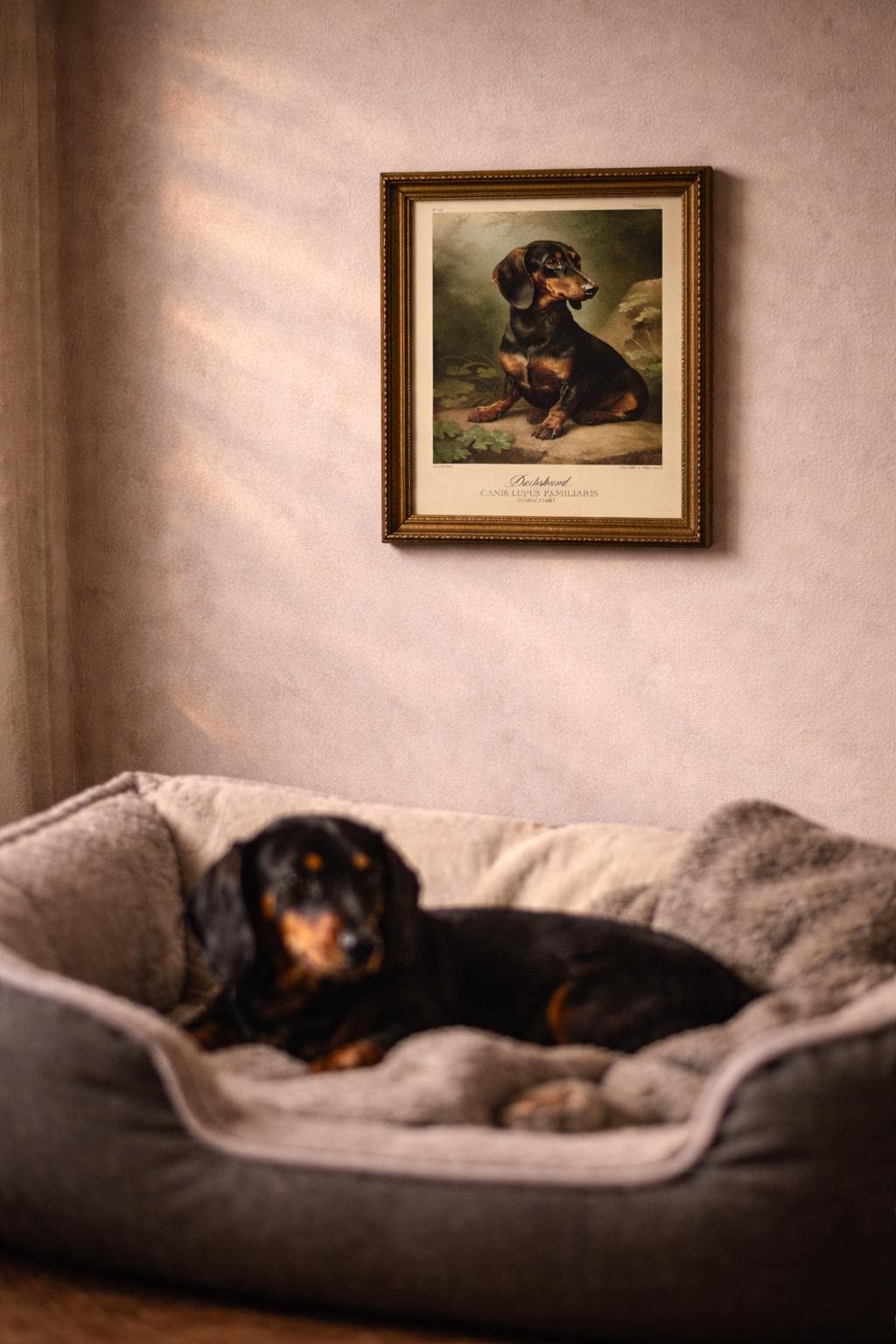
Vintage pet illustrations don’t exaggerate or dramatise. There is no forced humour, no theatrical pose. Instead, the animal is allowed to exist as it is. Attentive, grounded, quietly alert.
Whether it’s a terrier seated on a stone outcrop, a shepherd resting at the edge of a woodland path, or a working dog standing with quiet confidence, these portraits feel honest. They reflect companionship rather than spectacle. It’s this restraint that gives them longevity.
Why these images still resonate today
Modern pet lovers recognise something familiar in these works. The loyalty. The watchfulness. The calm assurance that comes from an animal simply being present. Vintage pet portraits offer a way to celebrate animals without turning them into caricatures. They feel thoughtful rather than sentimental, a balance that makes them as suitable for a hallway or study as they once were for parlours and libraries.
From working animal to beloved companion
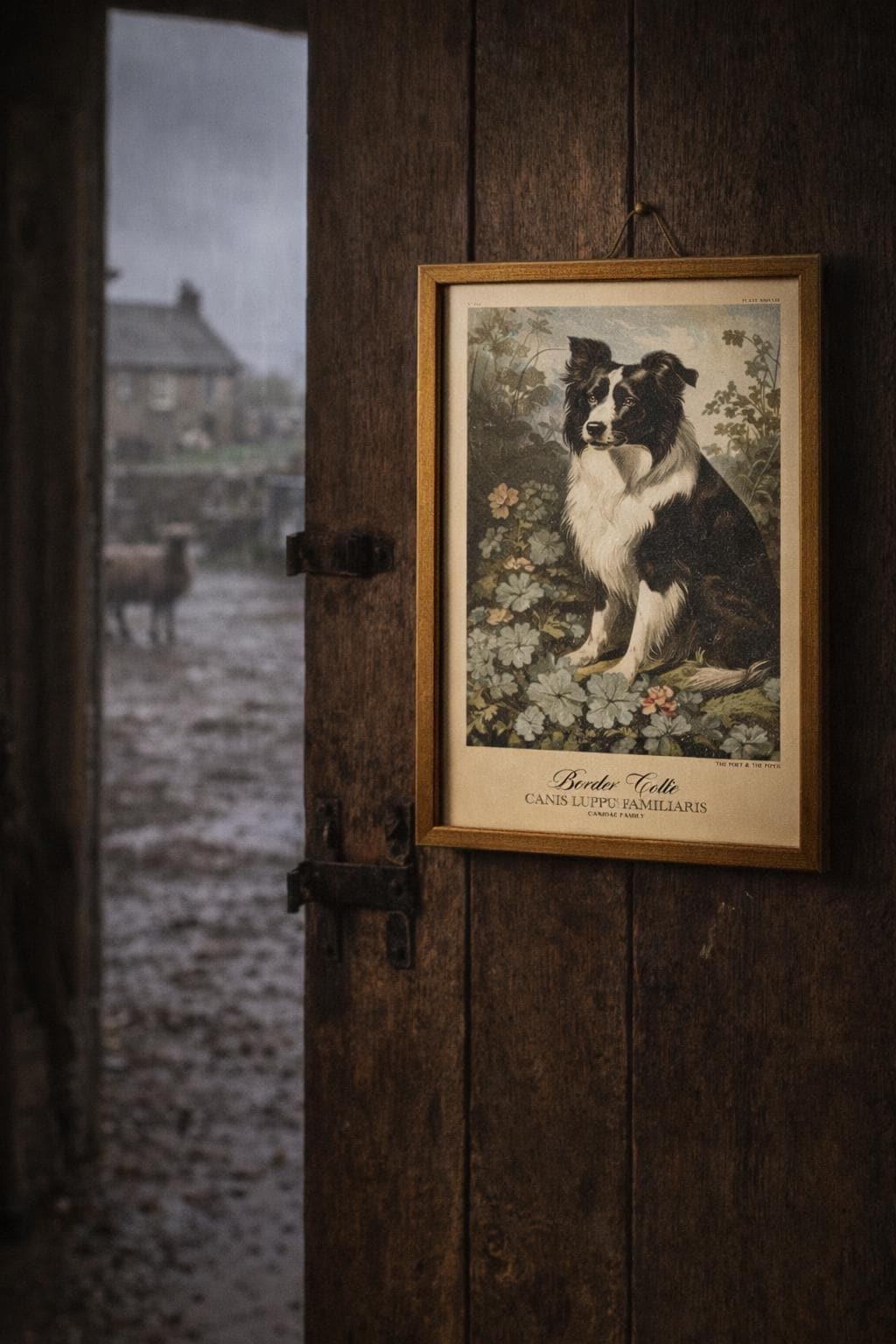
Historically, many of these dogs had roles, guarding, herding, retrieving, accompanying. Yet artists often softened these identities, portraying them not mid-task, but at rest. This moment of pause is important as we see them as companions instead of tools, and it’s one of the reasons these portraits feel so personal, even generations later. They remind us that the bond between people and animals has always been quiet, steady, and deeply felt.
Living with vintage pet art
In a modern home, vintage pet illustrations sit comfortably alongside both traditional and contemporary interiors. Their muted palettes and balanced compositions bring warmth without overwhelming a space. They are often framed and kept close, near reading chairs, stairways, or places where the household naturally gathers. Over time, they stop feeling like artwork and begin to feel like part of the home itself.
A tradition that continues
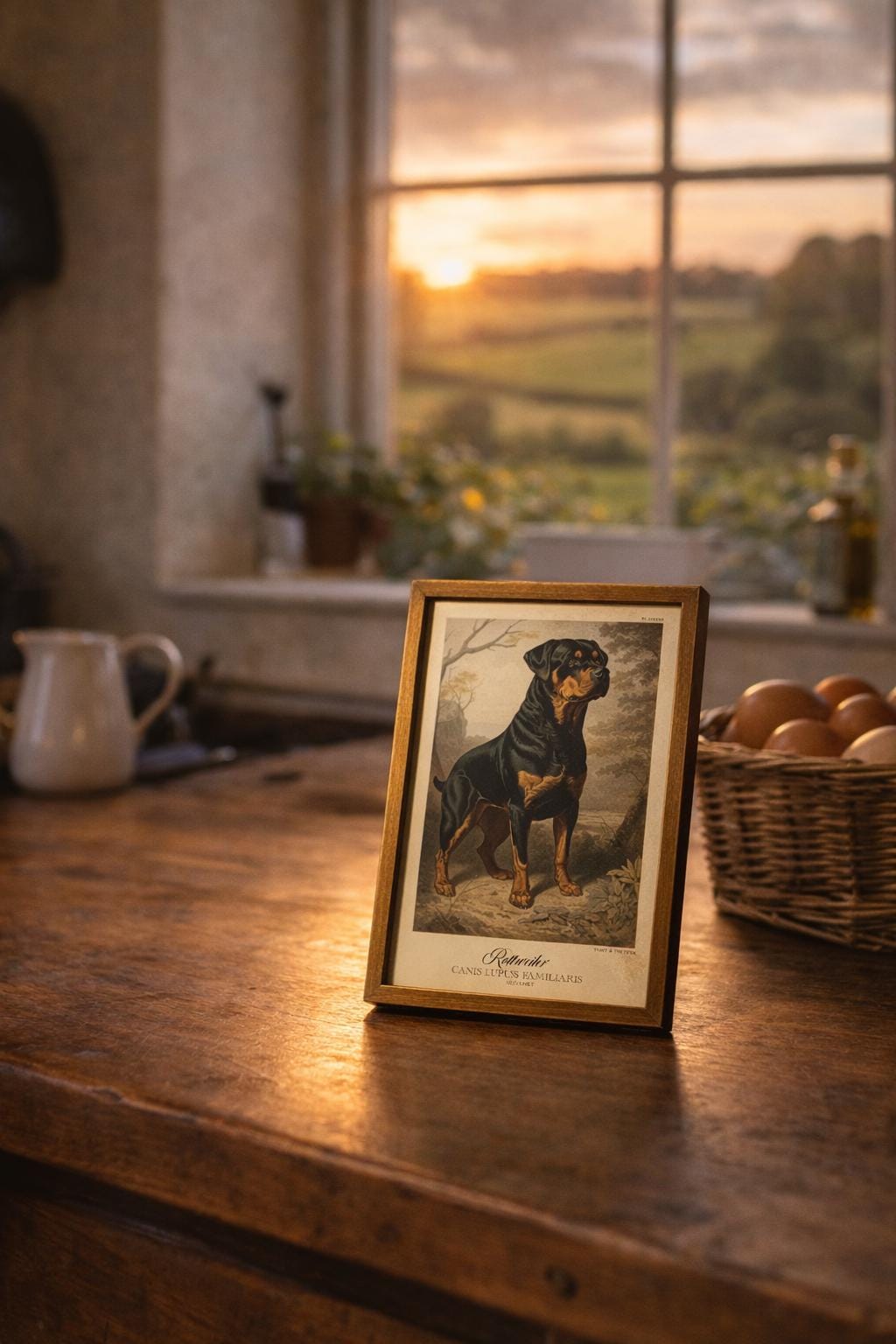
Vintage pet portraits endure because they were never trend-driven to begin with. They were made slowly, with attention and care, qualities that still resonate with those seeking meaning in the objects they choose to live with. In a world that moves quickly, these images ask us to pause. To look. And to remember that companionship, in all its quiet forms, has always mattered.