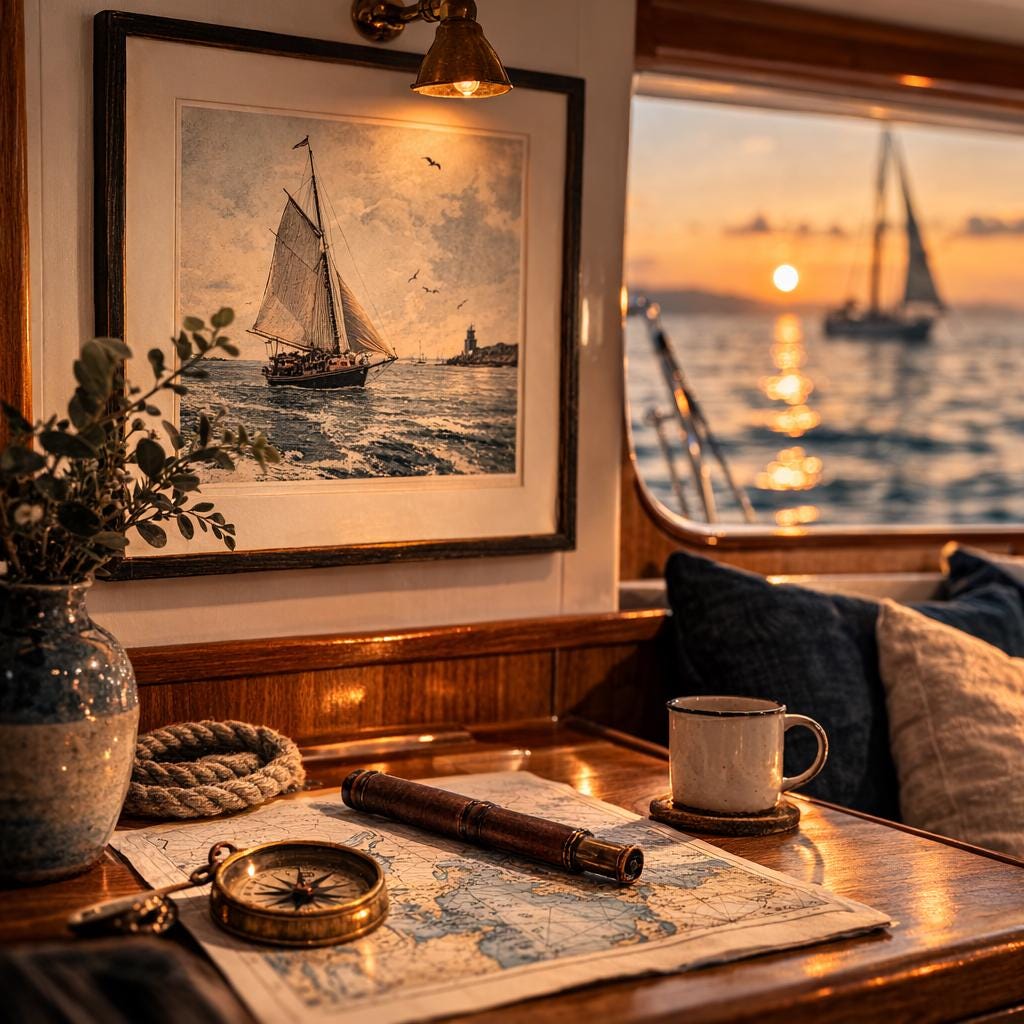
When people imagine art on yachts, the mind often jumps to something dramatic, valuable paintings, gallery pieces, or works worthy of museum walls. In reality, most yacht interiors benefit from something far simpler. Across the sailing boats and yachts we’ve seen, the artwork that works best is rarely the most expensive piece in the room. Instead, it tends to be carefully chosen prints, illustrations, or historical images that complement the space and the environment outside the hull. There are several reasons why.
Life at Sea Is Unpredictable
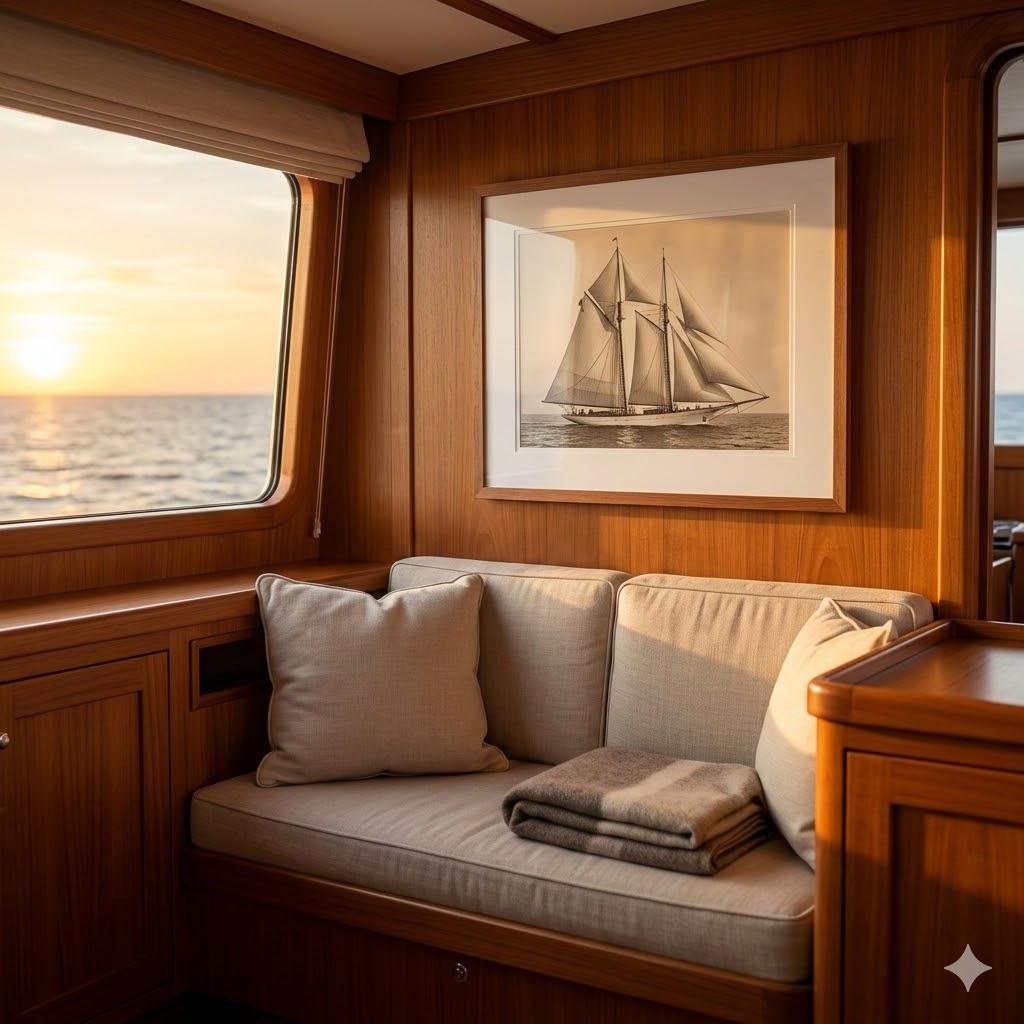
A yacht is not a static environment. Even in calm waters, a boat is always moving. Over time, salt air, sunlight, shifting temperatures and the general rhythm of life onboard all take their toll on materials and surfaces. For this reason alone, many owners prefer artwork that they can enjoy without worrying about it. High-value originals introduce a level of stress that doesn’t always suit life at sea. Owners can find themselves thinking about insurance, conservation, humidity levels, or the possibility of damage during a crossing. Simple prints remove that tension. They allow people to live with art rather than manage it.
The Interior Should Support the Experience
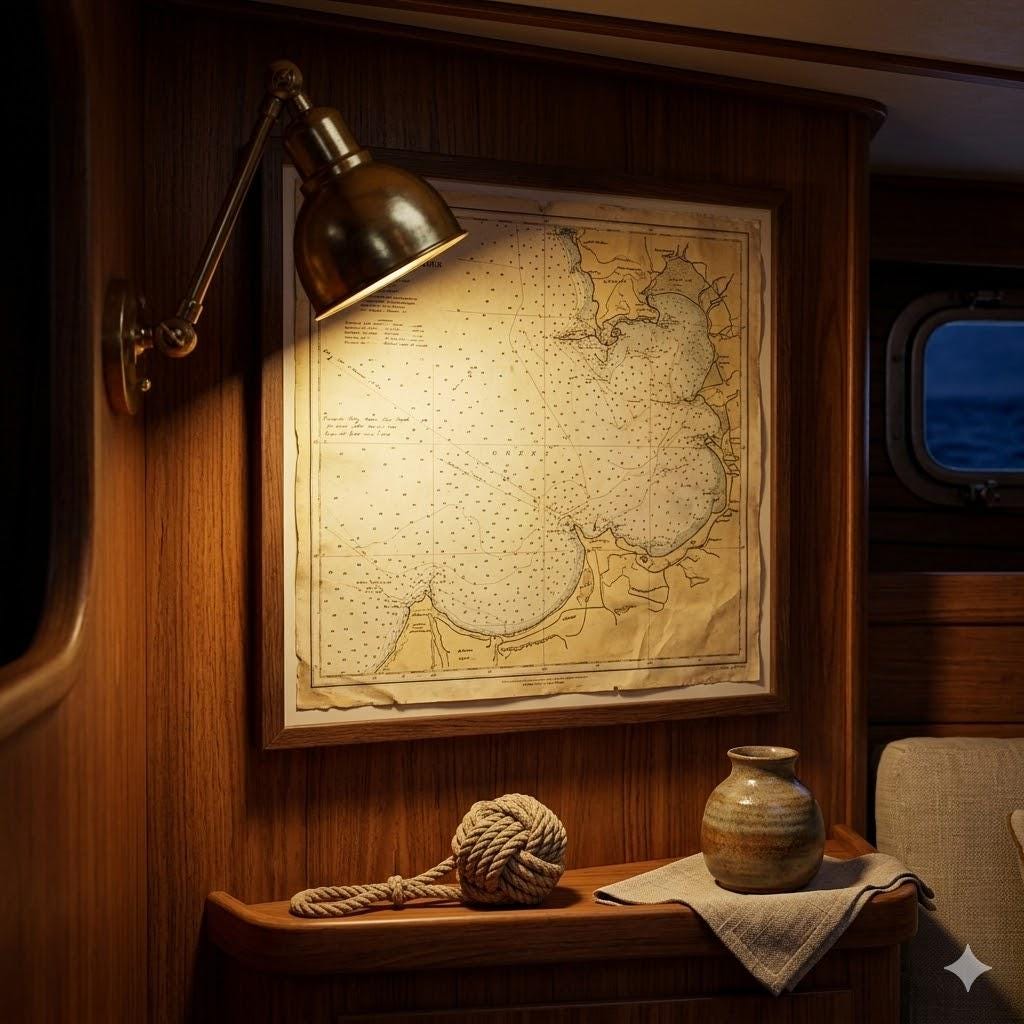
The purpose of a yacht interior is very different from that of a gallery. On land, artwork can be the central focus of a room. On a yacht, however, the view outside the windows is often the most powerful visual element. The sea itself becomes the artwork. Because of this, the pieces placed inside the cabin tend to work best when they support the atmosphere rather than compete with it. Vintage coastal engravings, maritime charts, naturalist illustrations of fish or shells, or subtle panoramic harbour scenes all sit comfortably within a yacht interior because they echo the environment outside. They add character without overpowering the space.
Practicality Matters
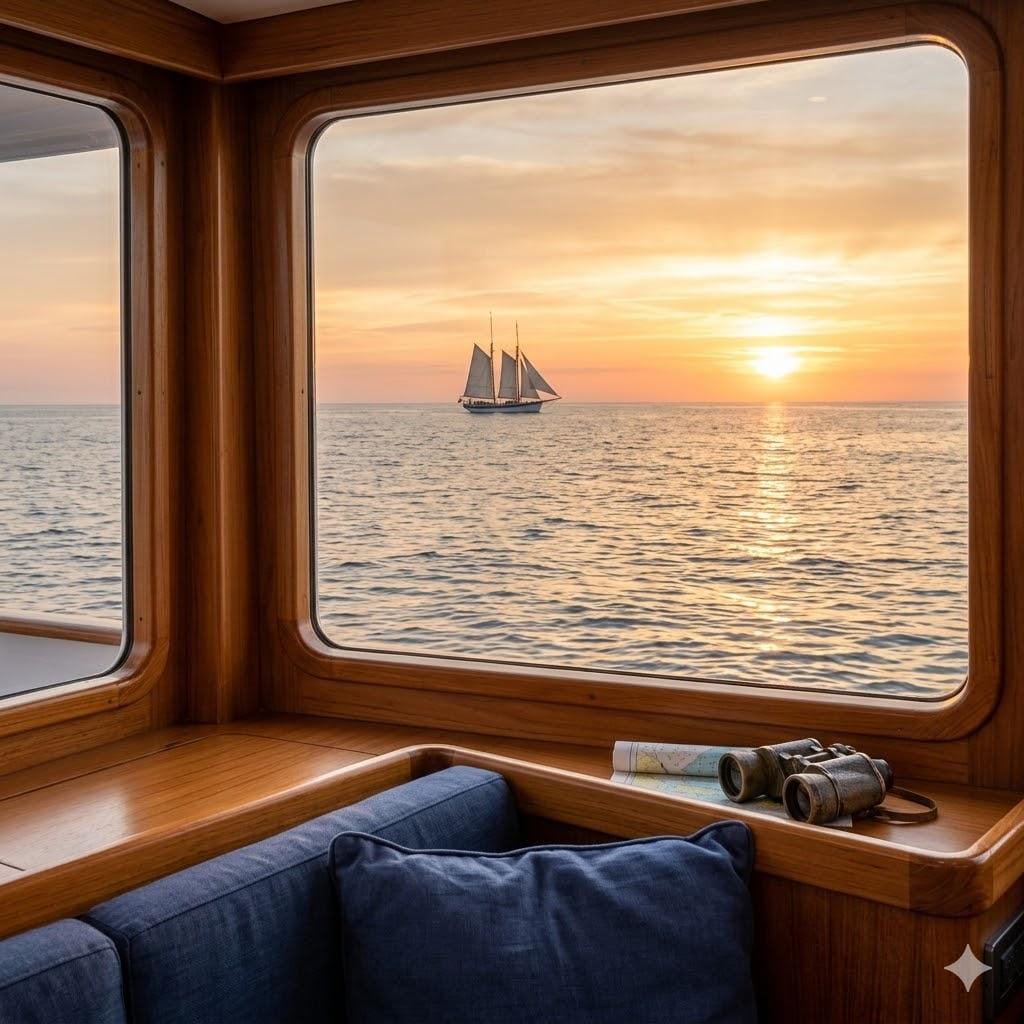
Another advantage of well-chosen prints is their practicality. Yacht interiors are compact and constantly in use. Furniture is multi-functional, walls are limited, and space is carefully considered. Artwork therefore needs to be adaptable. Prints can be framed simply, placed in pairs or small sets, or swapped out over time as the owner refines the look of the interior. If a frame is knocked during a passage or moisture finds its way into a cabin, the artwork can be replaced easily. This flexibility suits the evolving nature of yacht ownership. A boat interior is rarely static. It changes with each season, each voyage and each owner’s evolving sense of what feels right.
Atmosphere Over Value
Interestingly, the pieces that tend to feel most natural on board are not necessarily expensive at all:
- A beautifully printed coastal map
- A set of antique natural history illustrations. - A simple maritime engraving.
These works often bring a quiet sense of history and narrative to a cabin. They remind us that humans have been travelling and exploring the oceans for centuries. They connect modern sailing with the long story of maritime exploration. In that sense, their value lies not in their price, but in the atmosphere they create.
Art That Belongs at Sea
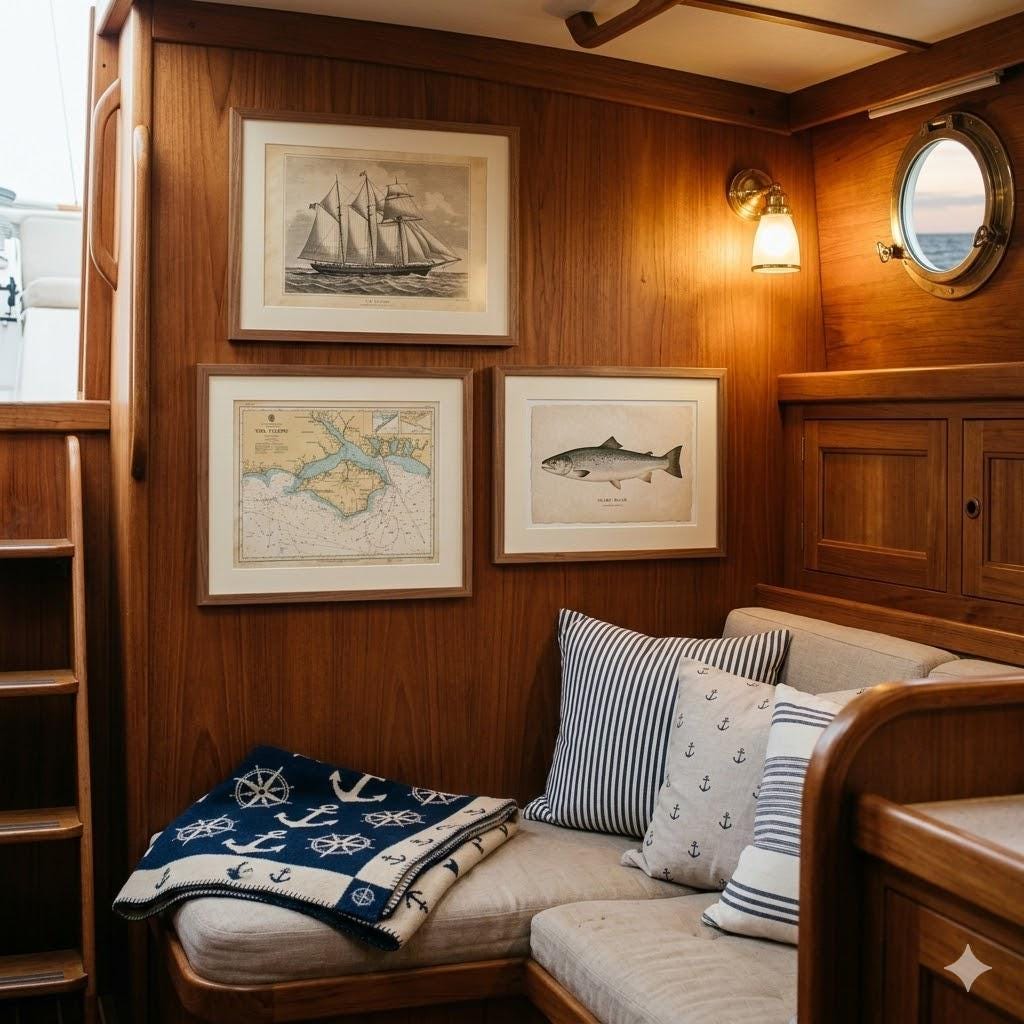
Yachts have a unique relationship with their surroundings. Unlike houses or apartments, they exist directly within the environment they reference. When a yacht carries artwork connected to the sea, charts, harbour scenes, marine life illustrations, coastal studies... the interior begins to feel naturally aligned with its setting. The art does not feel imported or decorative. It feels as though it belongs there.
A Space to Live In
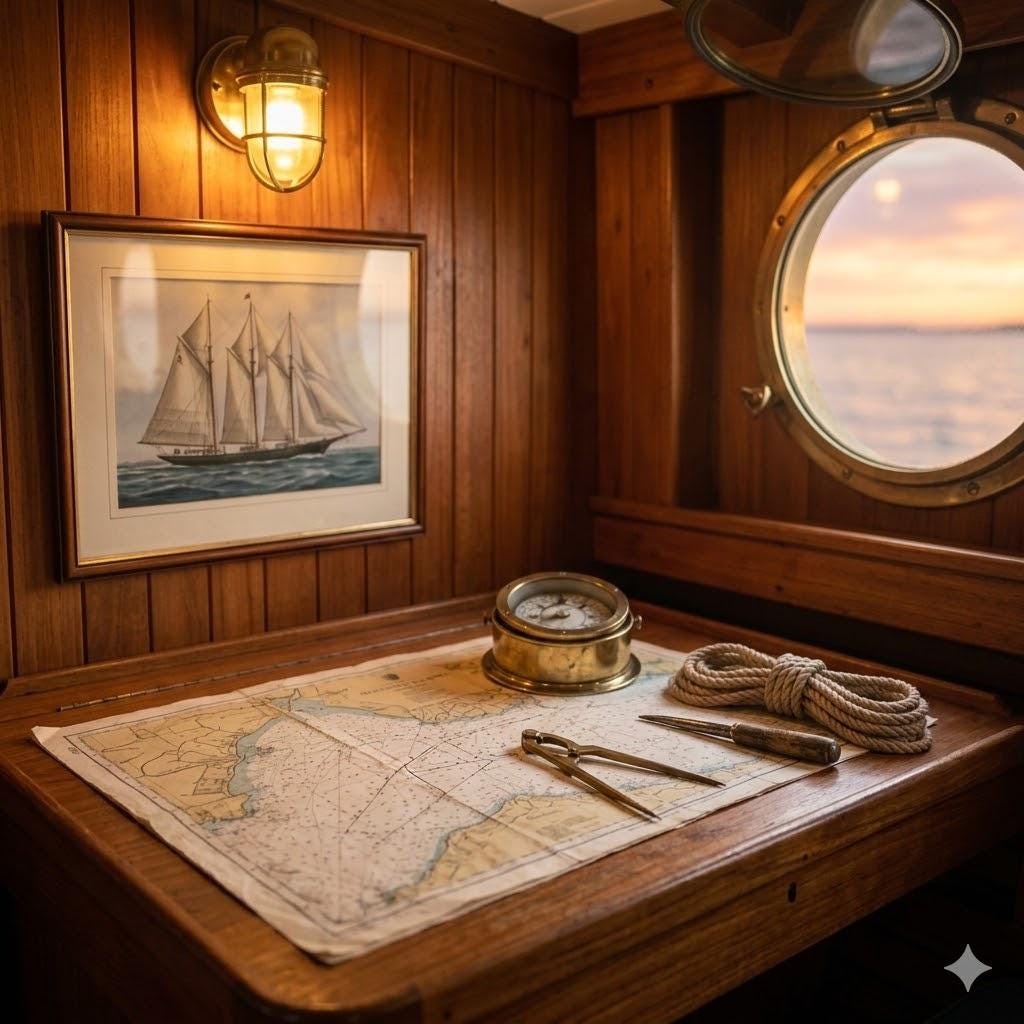
Ultimately, a yacht is not a museum. It is a place where people cook, talk, read, watch sunsets, navigate unfamiliar coastlines and spend long evenings anchored in quiet bays. The art inside these spaces should support that experience. Simple, well-chosen pieces often do this best. They add warmth, personality and narrative to a cabin without introducing unnecessary complexity. They make a boat feel lived in. And in many ways, that is the most important quality a yacht interior can have.