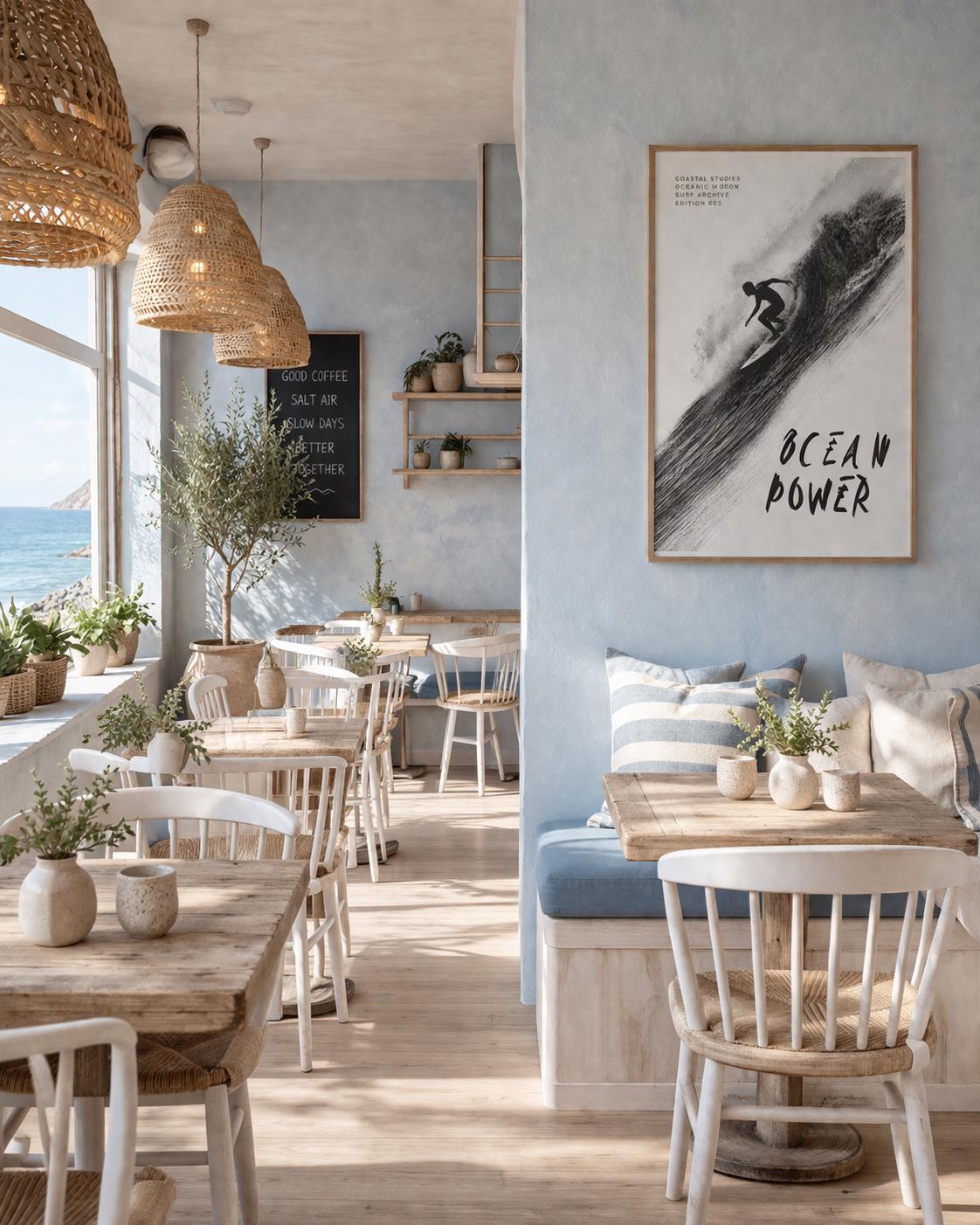
Setting the Scene: Designing a Place People Feel
A coastal café isn’t just about location, you need atmosphere.
The best ones don’t feel “designed,” they feel discovered. Like you’ve stepped into a place that has always belonged to the sea. Getting this right is less about stuffing a room with nautical props and more about carefully layering elements that quietly echo the coast.
1. Build Your Foundation with Colour
The strongest coastal spaces always start with restraint. Think:
- Soft beiges and off-whites → sand, driftwood, sun-washed walls
- Muted blues and turquoise → shallow water, distant horizons
- Occasional deep navy → contrast, depth, anchor points
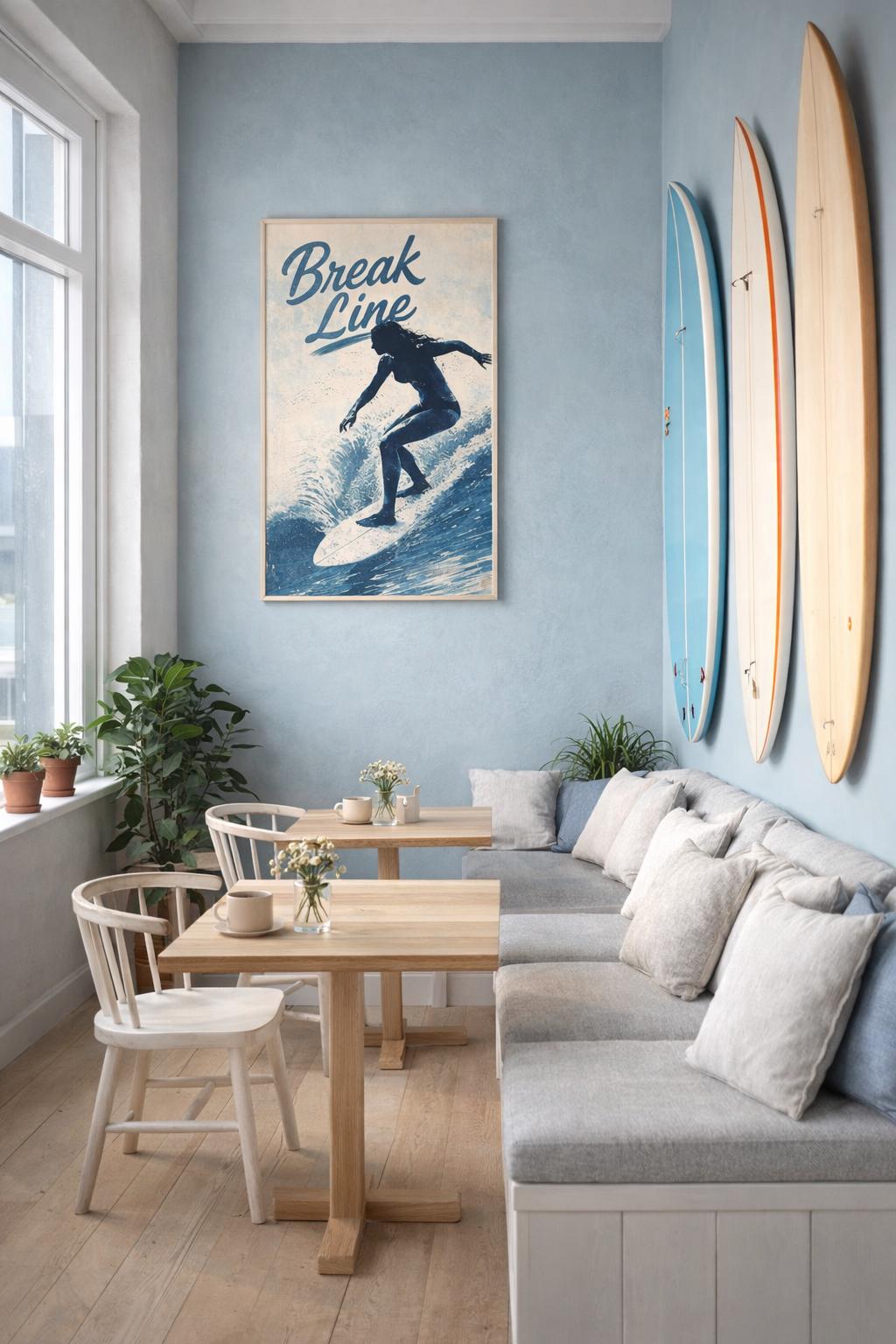
Avoid overly saturated blues, it quickly turns from coastal to theme park. The images you’ve referenced get this right: pale blue walls, washed textures, and natural light doing most of the work.
Rule of thumb: 70% neutral, 30% colour. Let the room breathe.
2. Use Materials That Feel Like They’ve Lived.
Coastal design works best when materials carry history. Key choices:
- Reclaimed wood tables → uneven grain, subtle wear
- Rope and jute textures → quiet maritime references
- Rattan or wicker lighting → soft shadows, natural warmth
- Linen and cotton upholstery → relaxed, breathable

Nothing should feel too polished. The slight imperfections are what make the space believable.
3. Let Lighting Do the Heavy Lifting
10 Lighting is where most cafés go wrong. What works:
- Maximise natural light (large windows, unobstructed views)
- Warm bulbs (2700K–3000K) for comfort and food appeal
- Layered lighting—pendants, soft ambient, subtle accents
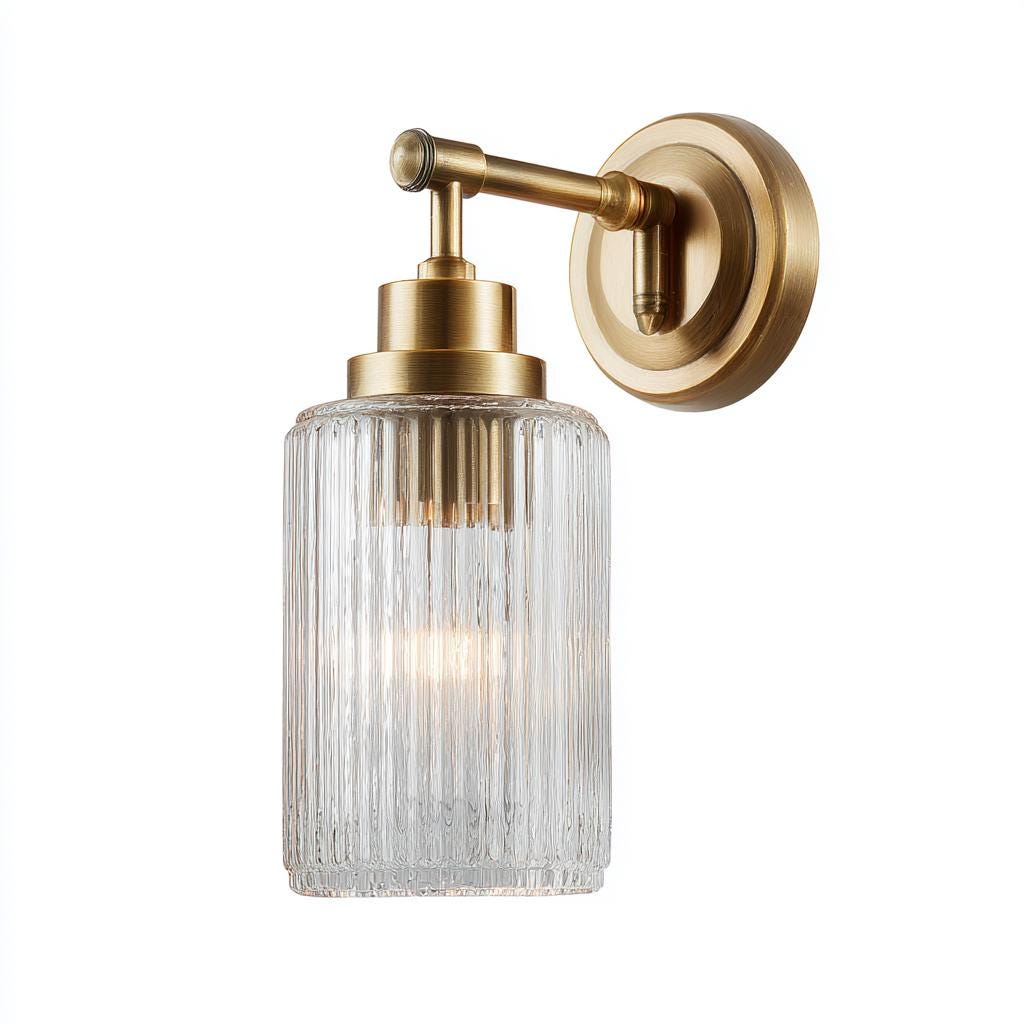
The goal is to mimic the feeling of late afternoon by the sea, even at 10am.
4. Keep Furniture Honest and Functional
Your furniture should feel effortless, not curated for Instagram.
- Wooden tables with simple profiles
- White or neutral chairs for lightness
- Bench seating with soft cushions for comfort
- Space between tables (this matters more than you think)
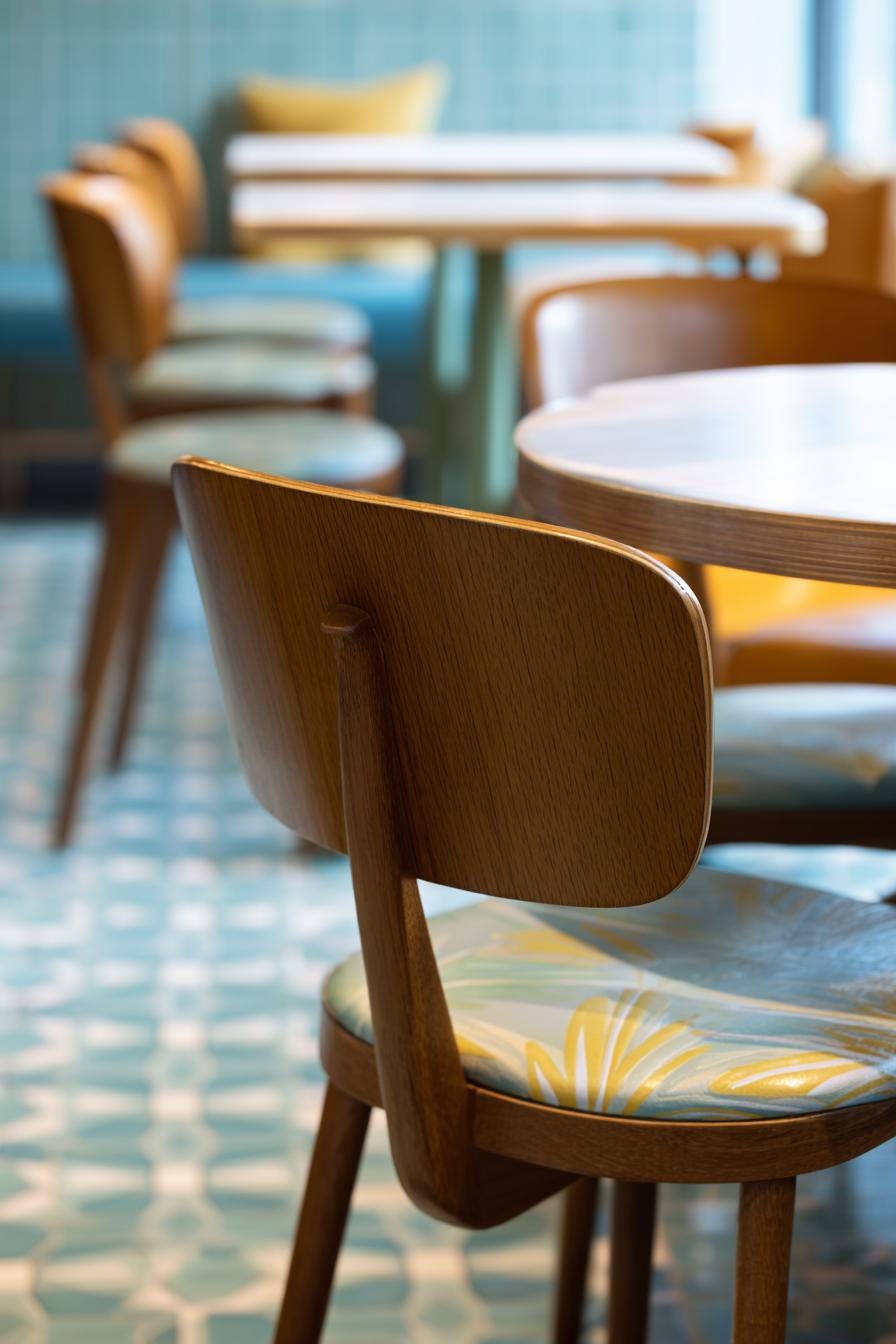
A cramped café kills the coastal feeling instantly. The sea is open, your layout should reflect that.
5. Use Art as Atmosphere, Not Decoration
8 Wall art is where you can inject identity.
The examples you’ve shared lean into:
- Vintage surf posters
- Minimalist wave photography
- Motion-driven artwork (wind, water, energy)
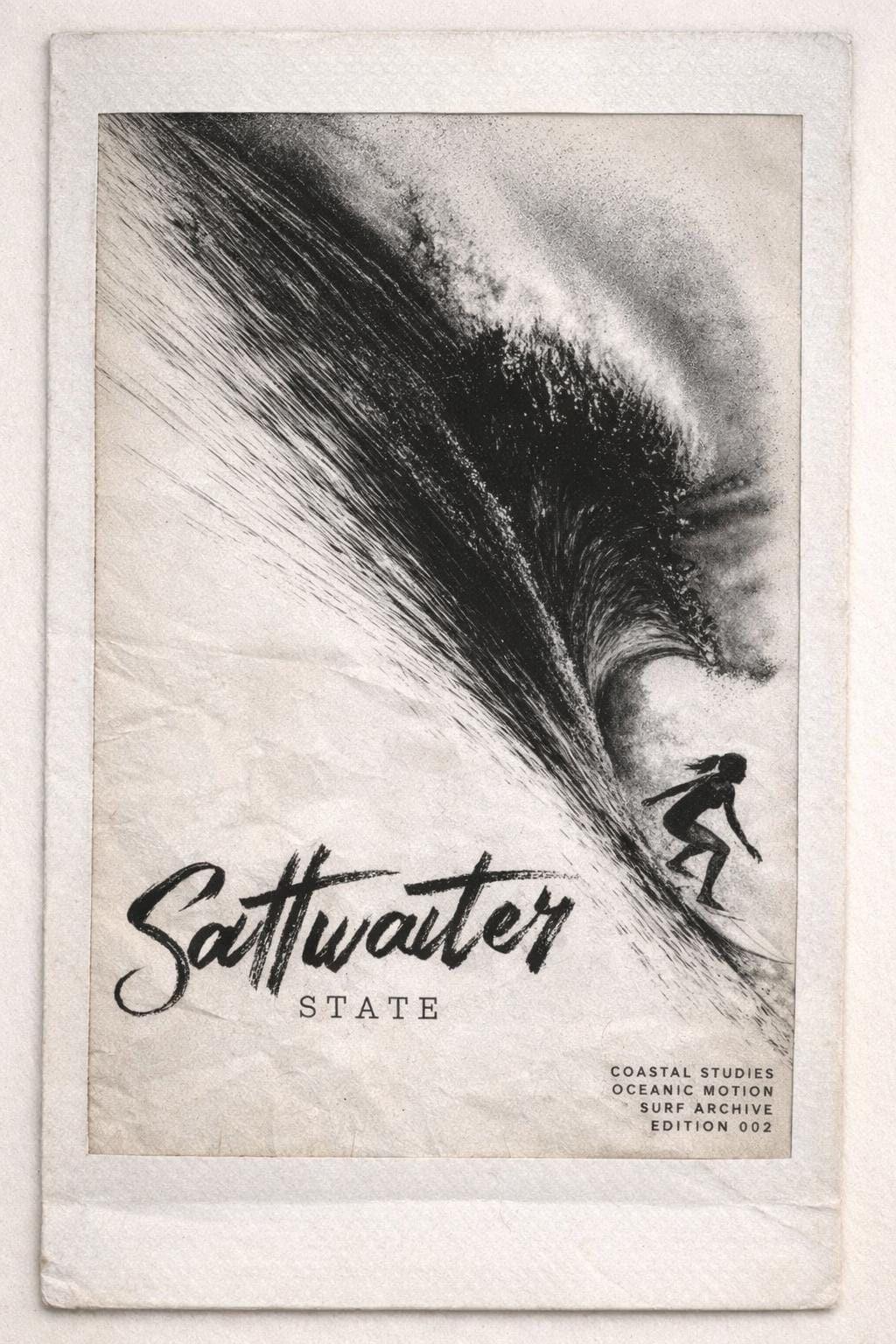
Keep it:
- Large scale
- Simple palettes
- Emotion-led (movement, calm, power)
Avoid cluttering walls, one strong piece beats five average ones.
6. Add Subtle Nautical References (Not Clichés)
7 This is where restraint really matters. Good coastal cues:
- Rope textures
- Shell details
- Vintage marine objects
- Handcrafted ceramics

What to avoid:
- Plastic anchors
- Overused “beach signs”
- Anything that feels staged
You want people to notice later, not immediately.
7. Design for Emotion, Not Just Aesthetic
The best coastal cafés do one thing well: they make people slow down. That comes from:
- Soft acoustics
- Comfortable seating
- Natural light
- Open space
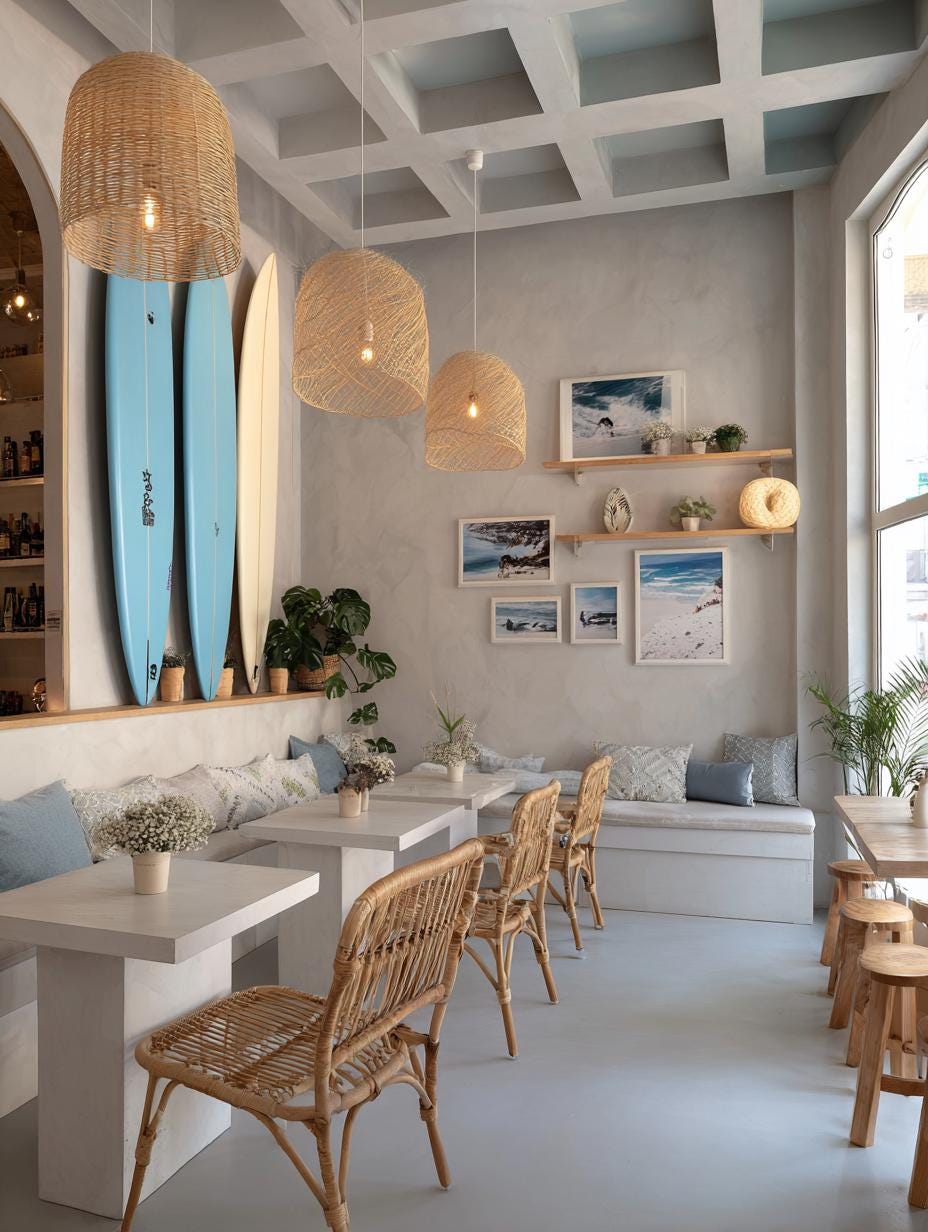
If someone stays longer than they planned, you’ve got it right.