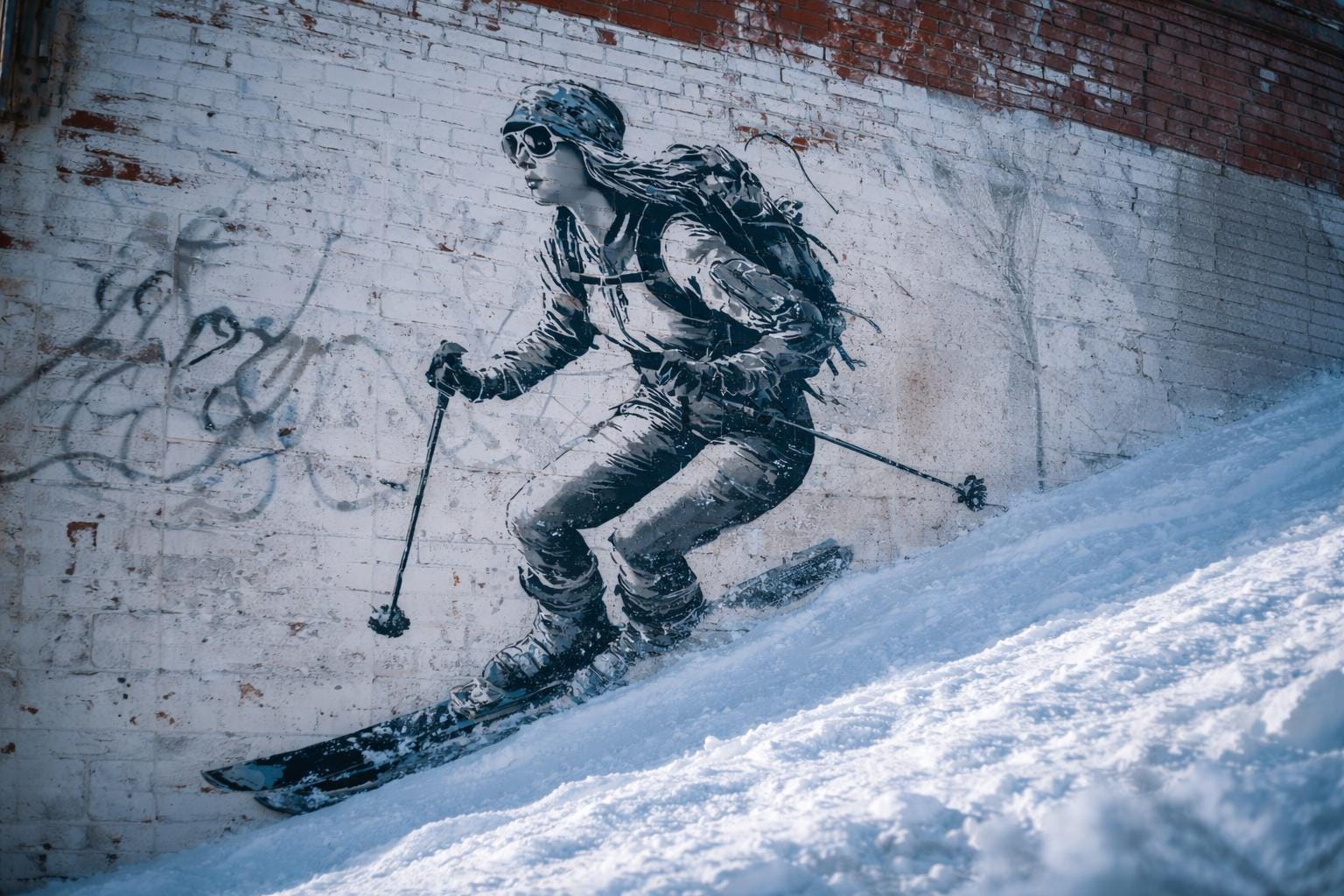
Skiing has been part of our lives for a long time.
Early starts. Cold hands. Flat light that slowly sharpens into contrast. That familiar moment when your legs start to burn halfway down a run, and your focus narrows to nothing but the next turn.
That feeling is what shaped this collection.
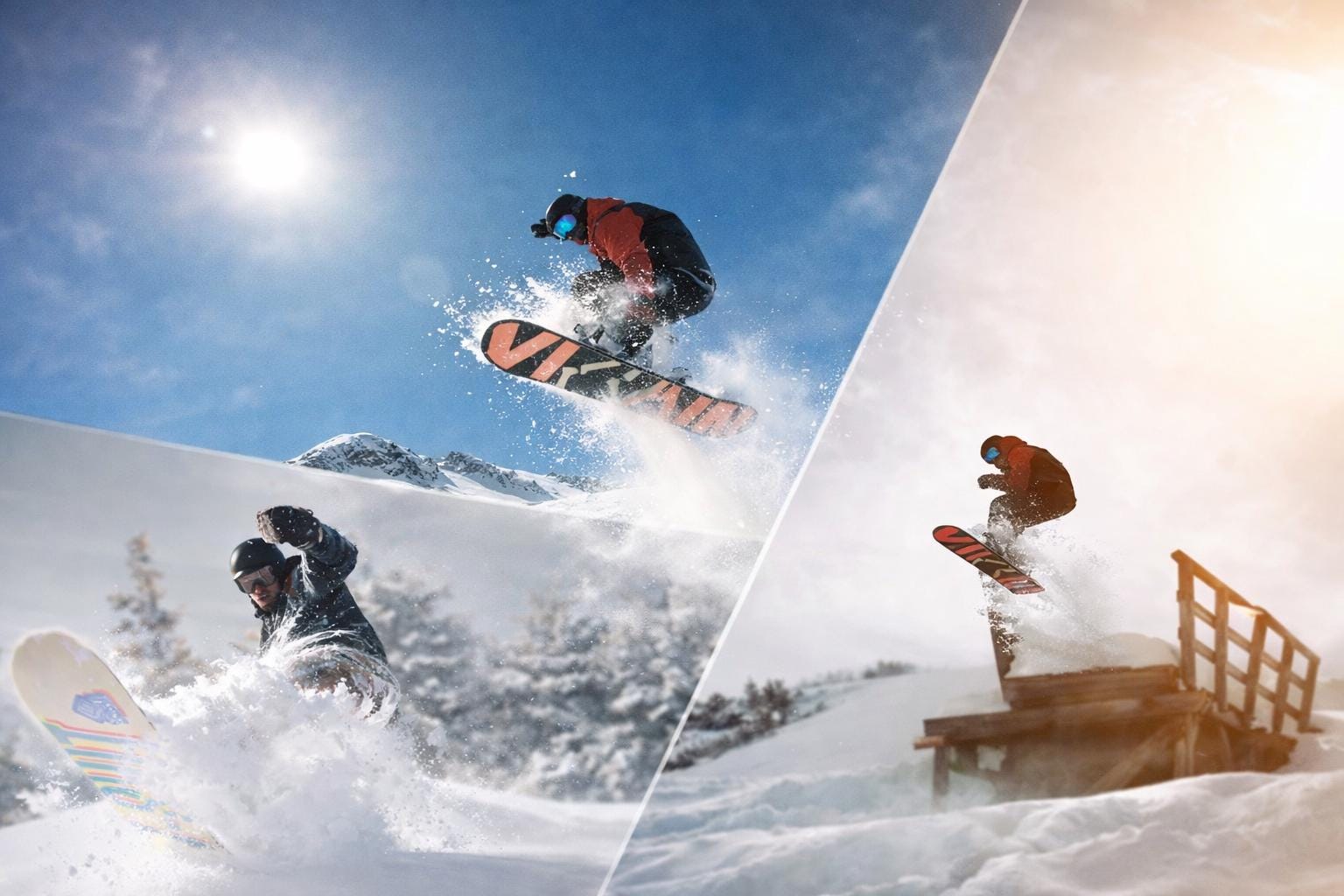
The reference images (taken on our ski trips between 1994 and 2025) behind these prints weren’t chosen because they were dramatic. They were chosen because they felt true. Moving through trees. A board leaving the ground for a split second. A wide, open face with no clear destination. Not a moment designed to be seen, just one that happens when you’re properly inside the day.
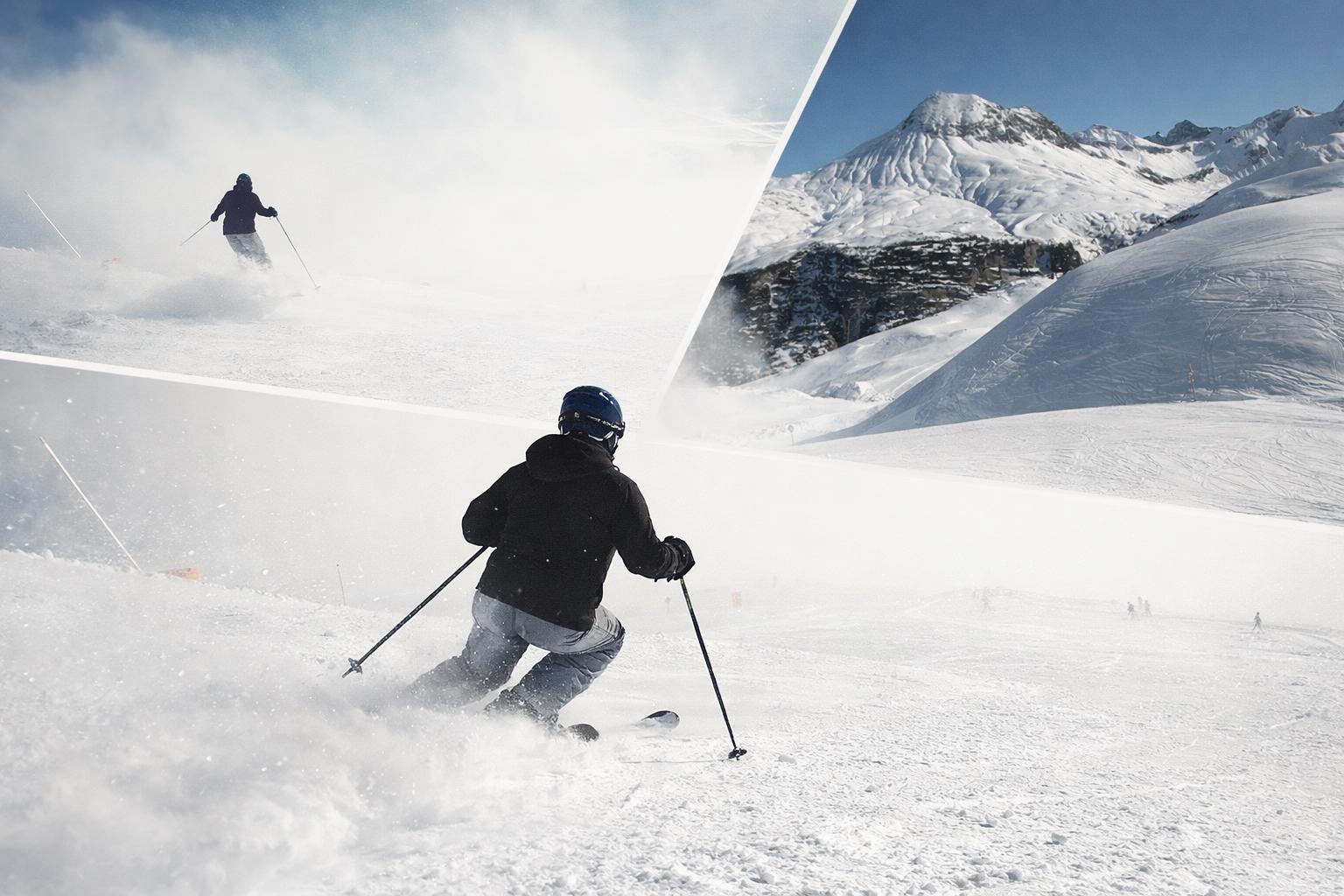
This is what most days on snow actually look like once you move away from the lifts and the obvious lines. Not silence, exactly, but space. Enough room to feel your speed. Enough room to notice how the snow reacts when you commit fully to a turn. Skiing and snowboarding change when you stop chasing the “big moments” and start noticing patterns instead.
- The way skis track through soft snow. - The brief weightlessness before a landing. - The spray that hangs for a second longer than you expect. - The line you leave behind, already fading as you move on.
Those are the details we wanted to hold onto. The designs reflect that mindset. Each print strips the experience back to its essentials. The rider isn’t a portrait. There’s no identity to read into. Helmets, goggles, and distance remove personality on purpose. What matters is posture, balance, direction, the body responding instinctively to terrain.
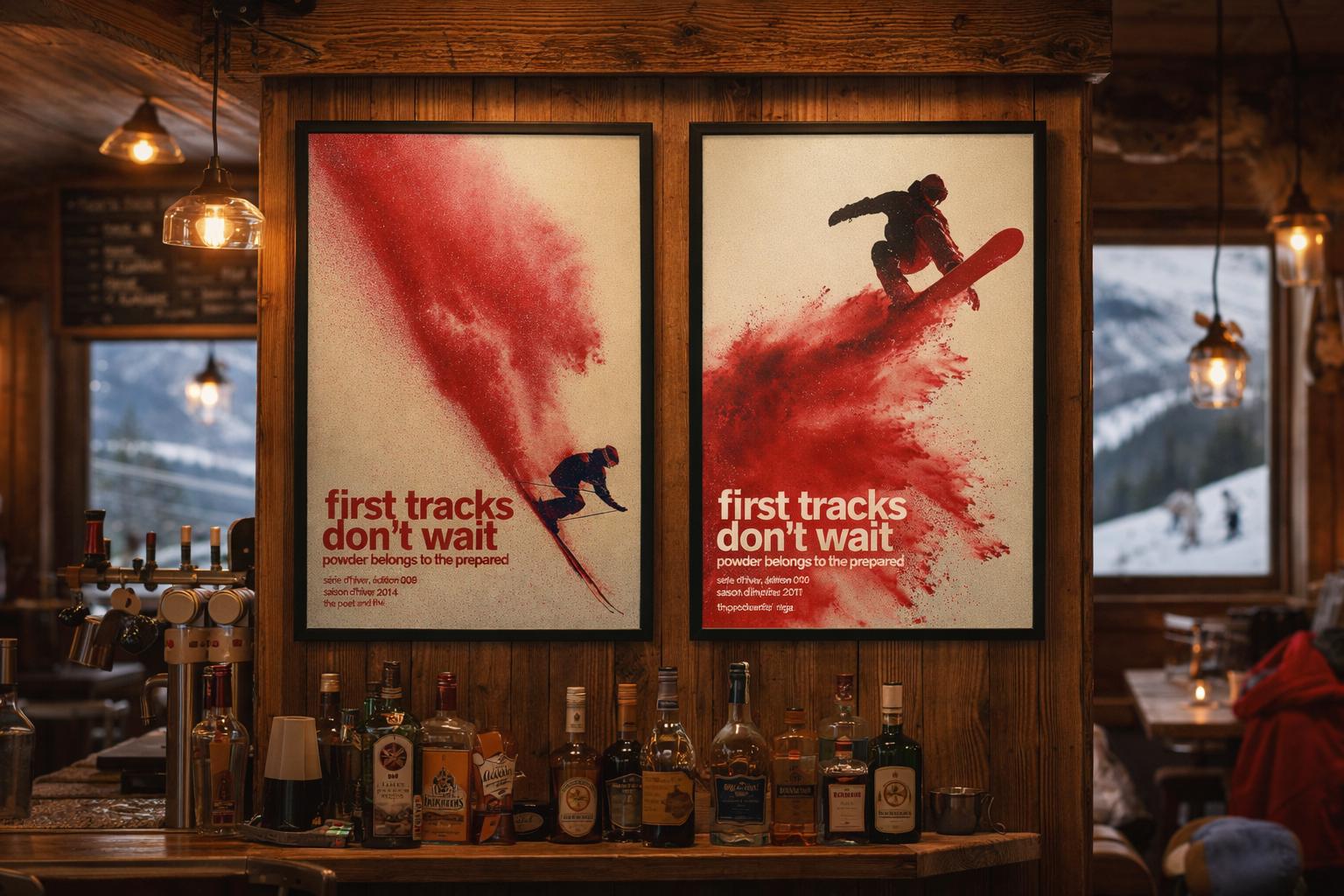
Snow isn’t treated as decoration. It’s part of the motion. It behaves like texture or grain, something active rather than scenic. The palette stays limited for the same reason. Skiing, when you’re inside it, often feels visually reduced: white ground, blue shadow, sharp light, occasional contrast. Anything more starts to feel exaggerated, like memory edited after the fact.
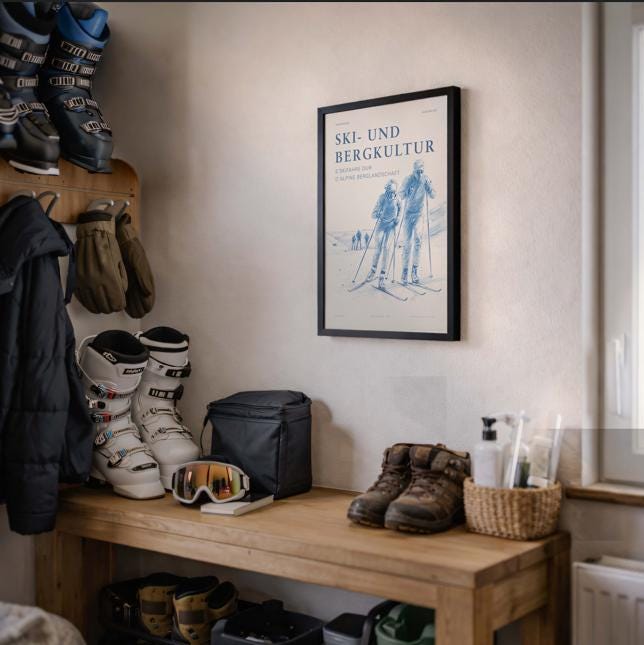
The text follows the same logic. It doesn’t explain the image. It behaves more like reference language, the kind you’d find on a trail map, a guidebook, or scribbled in the margins of technical notes... Terrain. Conditions. Movement.
Simple descriptors that acknowledge skiing as something you do, not something you watch. These aren’t prints about performance or achievement. There’s no podium, no finish line, no moment held up for approval.
They’re about repetition, rhythm, and the physical satisfaction of moving well through snow, whether that’s threading trees, floating briefly off a lip, or settling into a long, steady descent. About skiing when no one’s filming you.
We go back to a time when the best part of the day doesn’t need proof.
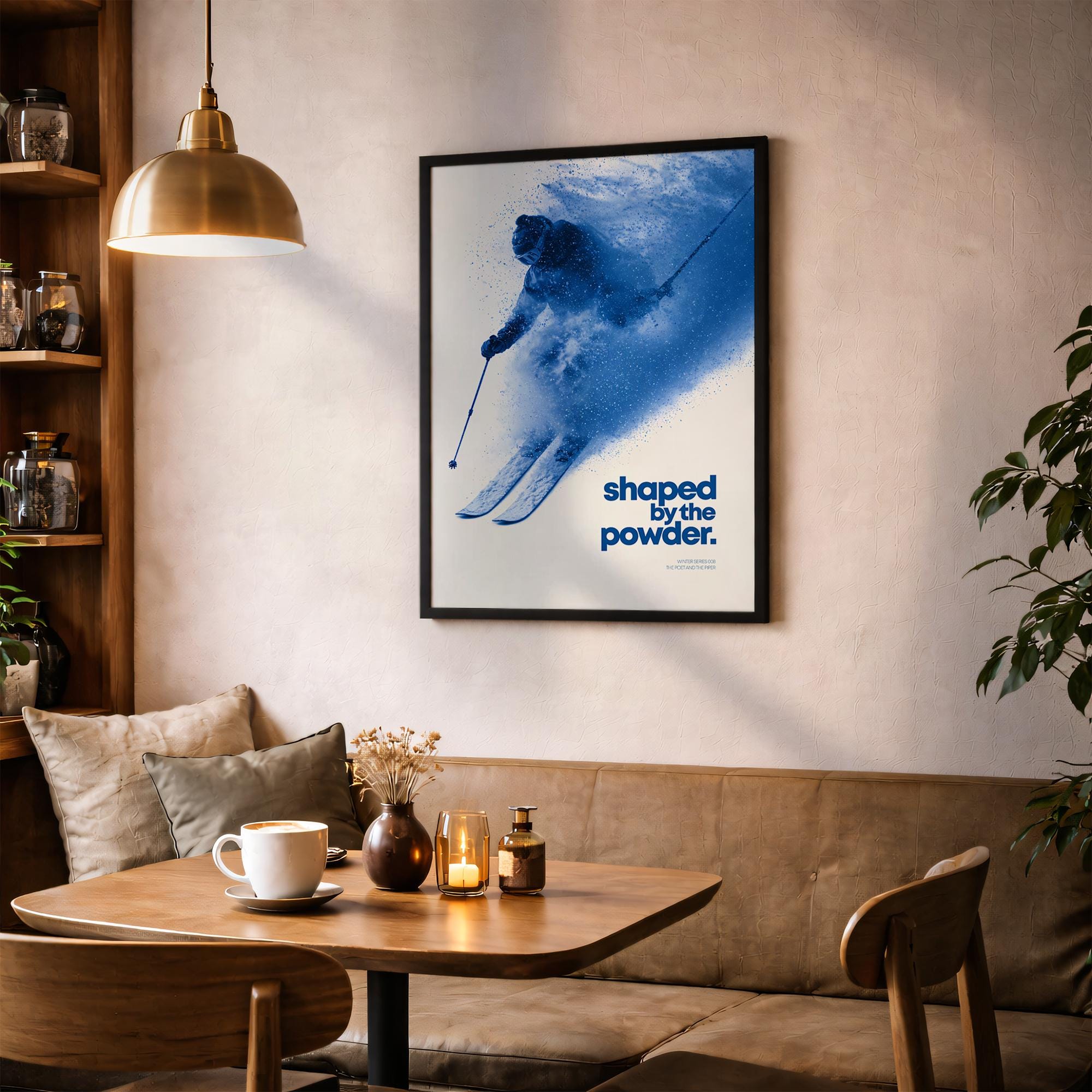
That’s also why these images work as a set. Each one captures a different phase of motion, glide, lift, turn... but they all come from the same place.
The experience of being on snow often enough that you stop trying to make it look impressive. Together, they reflect what skiing feels like once it’s no longer a novelty.
These prints are meant to live quietly in a space. Not loud. Not performative.
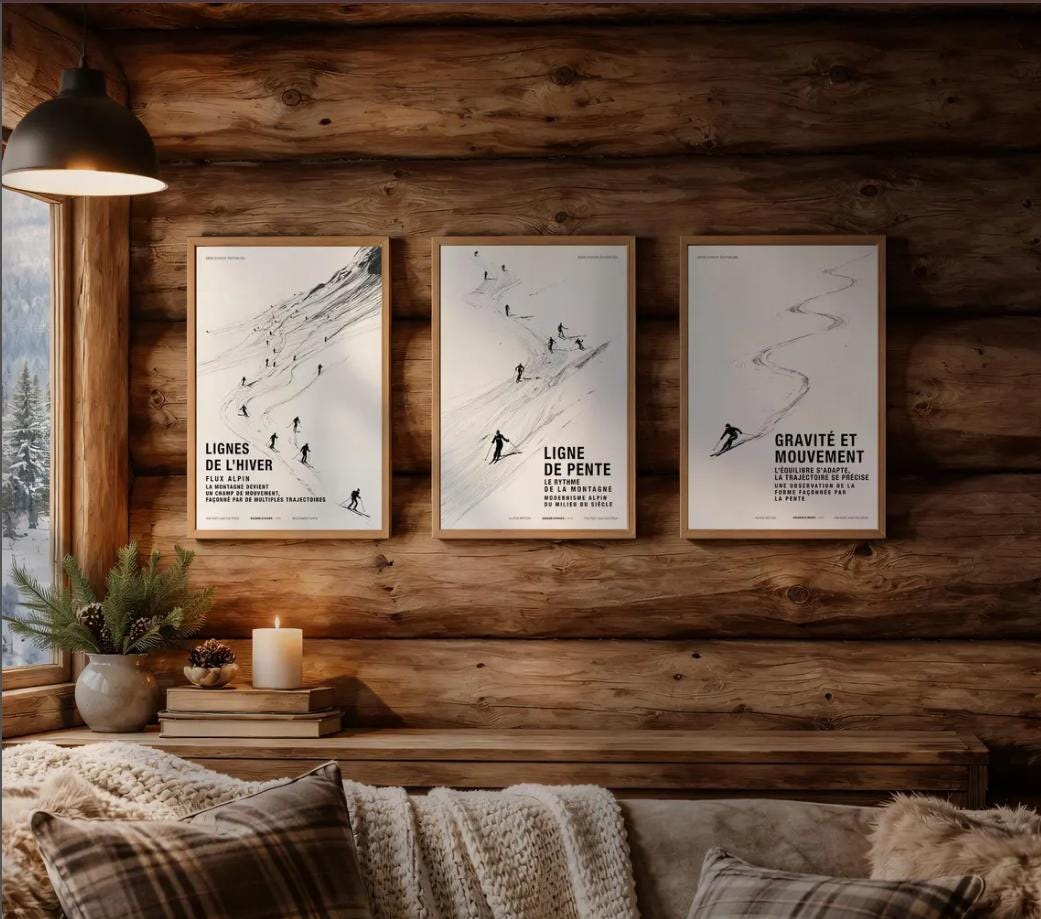
Just present, like skiing or snowboarding itself, once it becomes part of your life.