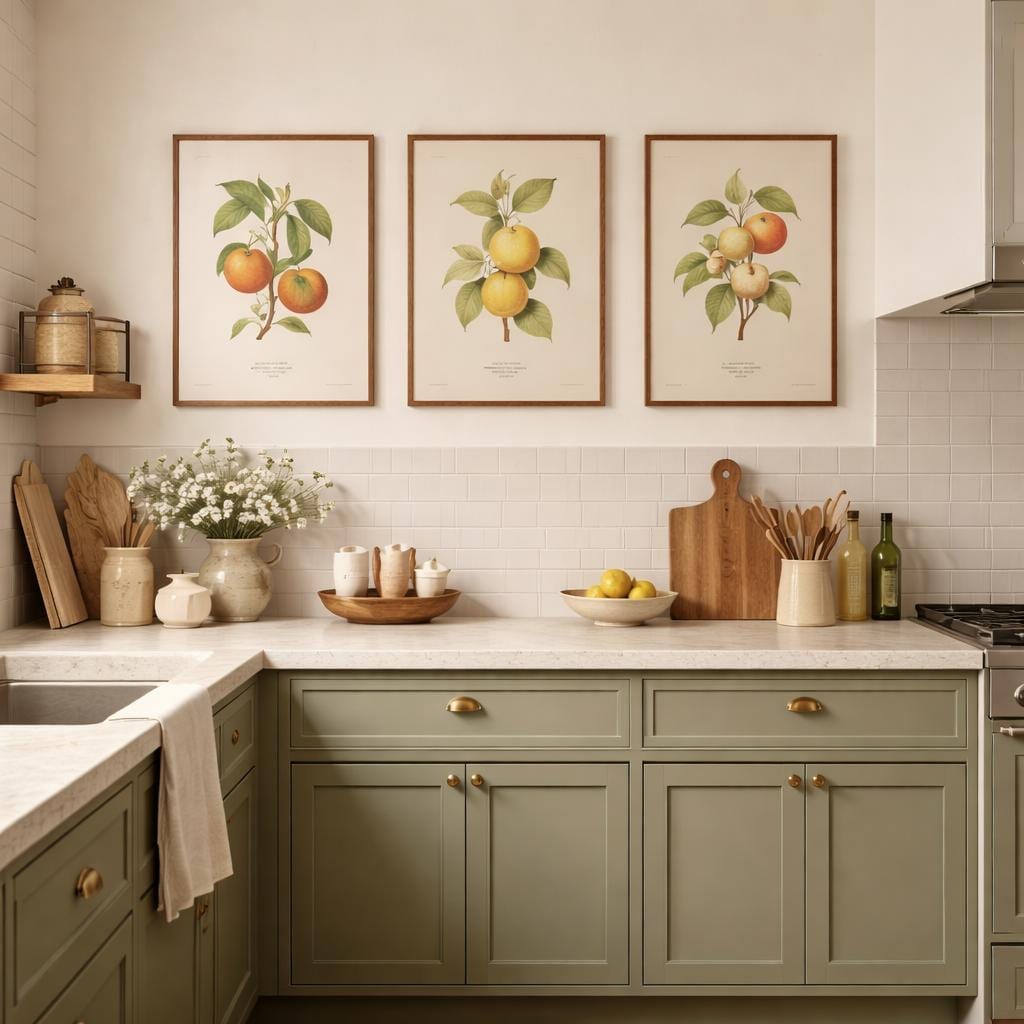
Kitchens have changed. They’re no longer hidden away as purely practical rooms. They’re where mornings begin half-awake with coffee. Where conversations linger long after plates are cleared. Where light changes throughout the day and quietly alters the mood of the space. Decorating a kitchen well isn’t about adding more. It’s about softening what’s already there. Most kitchens come with hard surfaces by default, stone, tile, metal, glass. What they lack is warmth. And warmth is what makes a kitchen feel lived in rather than installed.
Start With Tone, Not Trends
Before thinking about objects, think about atmosphere. Is your kitchen bright and coastal? Warm and rustic? Clean and minimal? Slightly mid-century? Choose two core tones and let them guide you. Muted olive cabinetry works beautifully with natural oak shelves. A white kitchen can feel entirely different when paired with soft terracotta ceramics or brushed brass handles. The goal is cohesion. When colours repeat subtly across the room, everything feels intentional.
Layer Texture Carefully
Wood boards. Linen tea towels. Handmade ceramics. Woven baskets. These are the elements that interrupt the gloss of cabinetry and bring balance. Open shelving is particularly effective when styled thoughtfully. Instead of filling it with uniform glassware, mix heights and materials. Stack plates horizontally. Lean a small framed print against the wall. And yes, kitchens absolutely benefit from art.
Hang Art Where You Don’t Expect It
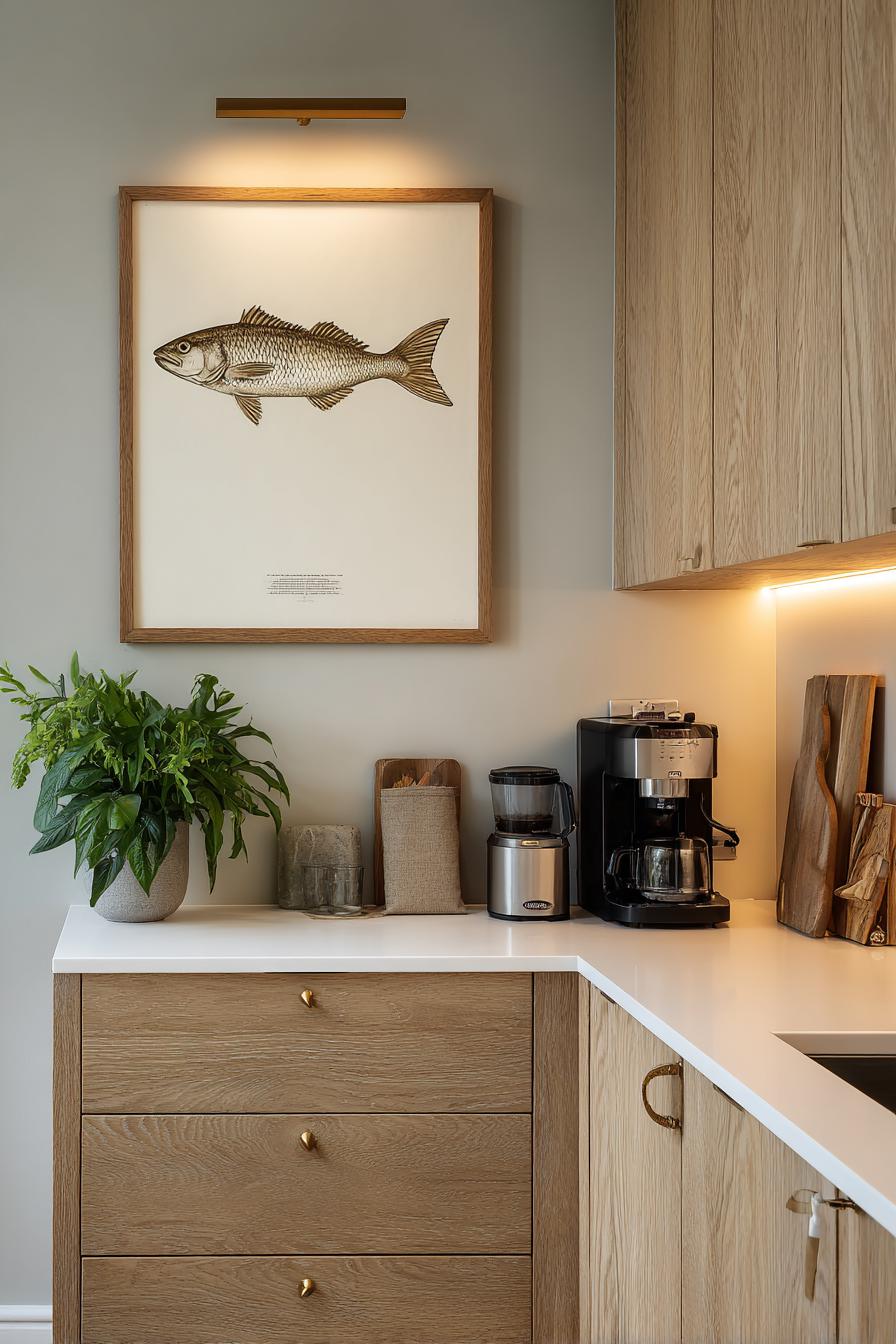
A framed botanical above a breakfast nook shifts the mood instantly. It turns a corner into a place to sit rather than just somewhere to eat. A vintage herb study near a coffee station adds character without interfering with practicality. Coastal fish illustrations work beautifully in lighter kitchens. Botanical studies feel right in farmhouse spaces. Even a small framed mid-century print can bring structure to a modern kitchen. Keep frames simple, oak for warmth, black for clarity. Avoid overly ornate frames in busy spaces. Let the art breathe.
Think About Sightlines
Stand in your doorway. What do you see first? That’s where your visual anchor should sit. In many kitchens, there’s a blank stretch of wall between cabinets and doorways. That space is often ignored, but it’s prime real estate. A vertical print here draws the eye and balances cabinetry. When the walls feel considered, the entire kitchen feels more settled.
Keep It Edited
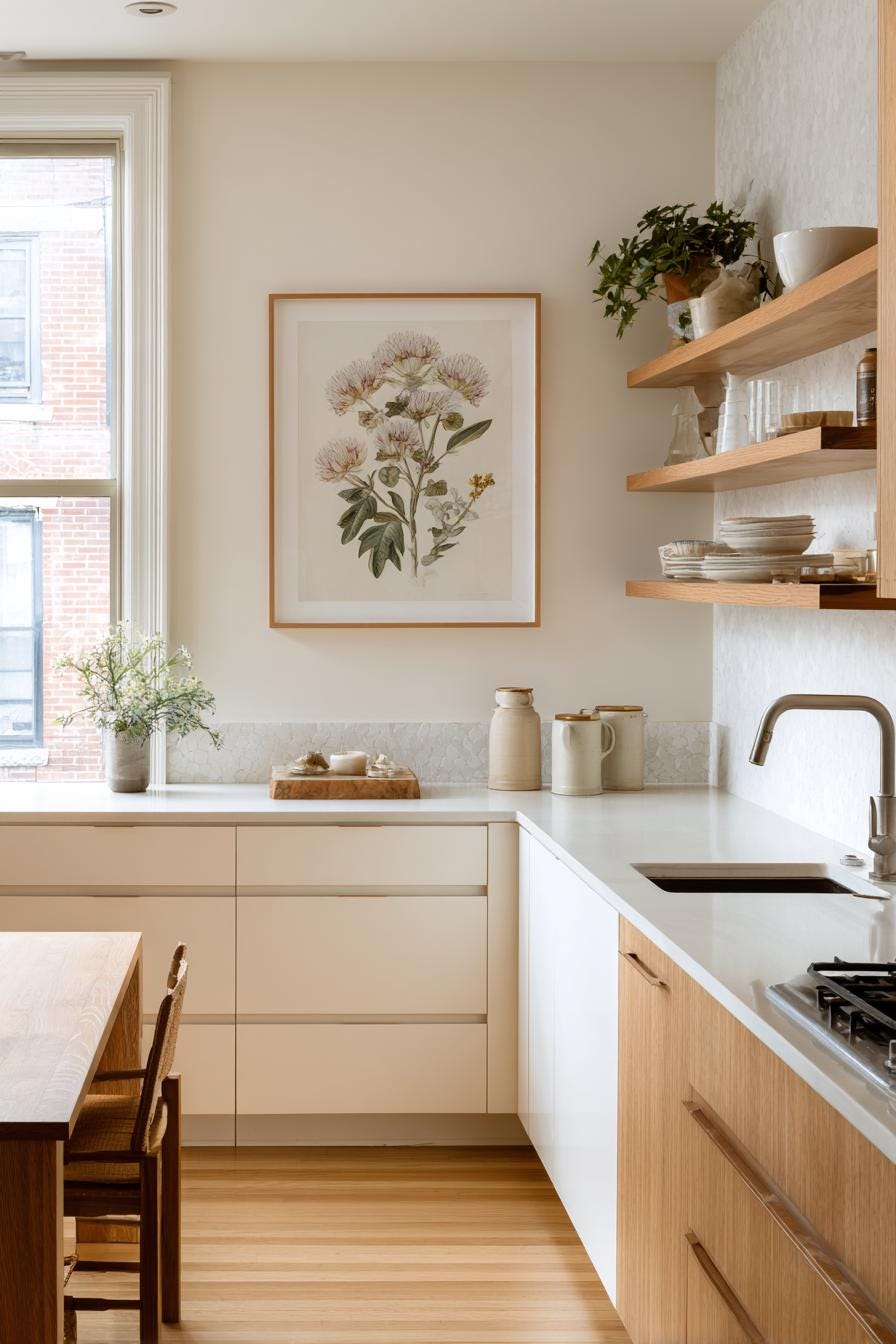
Clutter competes with art. Too many jars, utensils, signs, hooks and the eye doesn’t know where to rest. Choose fewer objects with more impact. A well-framed print does more for a kitchen than five decorative plaques ever could. The best kitchens feel warm, layered, and quietly styled. And often, that warmth begins on the wall.