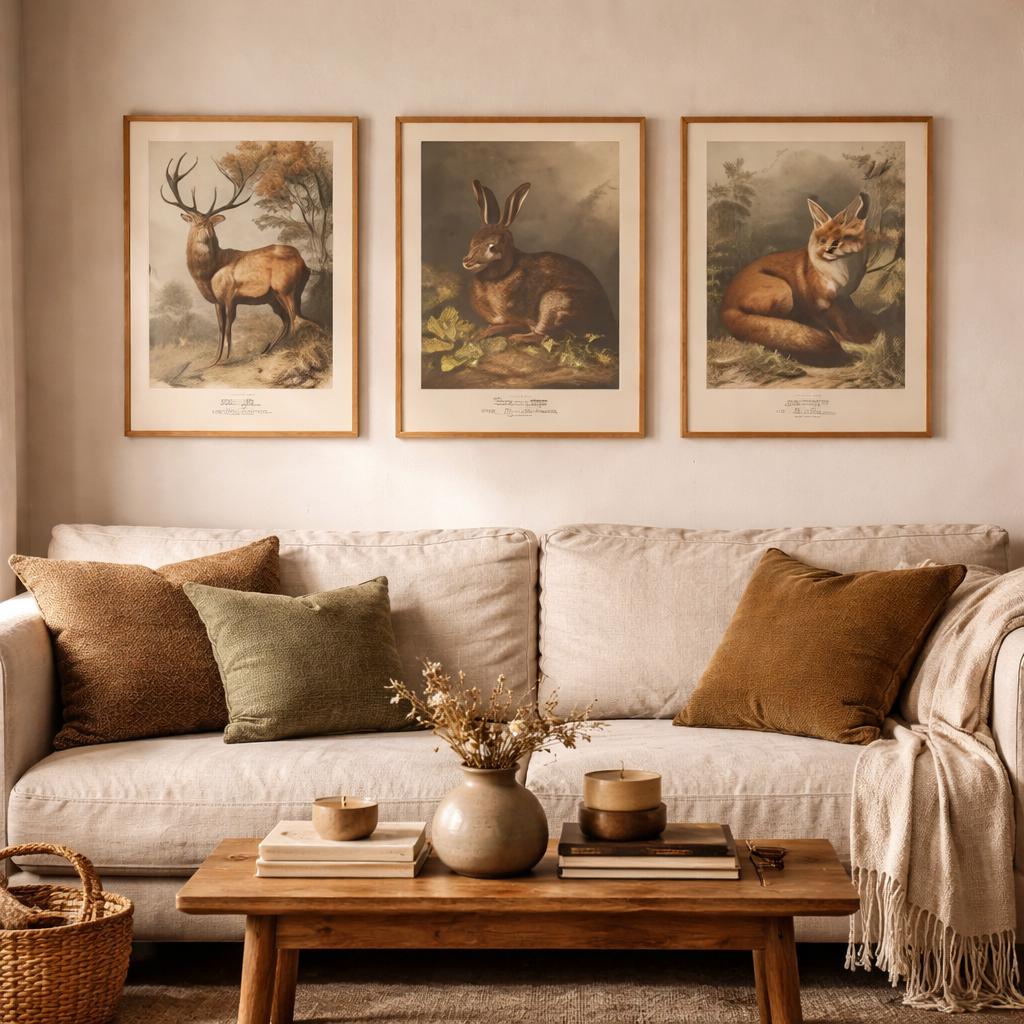
The living room carries more expectation than any other space. It has to host guests gracefully. It has to feel comforting at night. It has to represent you. And yet, the biggest mistake people make is starting with furniture. The most powerful living rooms begin with the walls.
Choose One Substantial Piece First
Before buying cushions, before rearranging chairs, decide what will anchor the room visually. A large vintage landscape in a walnut frame. - A bold mid-century abstract. - A classical portrait above the fireplace. - A trio of coastal studies in light oak.
One substantial piece establishes mood instantly. It determines whether the room feels calm, dramatic, playful, nostalgic or refined. Everything else becomes easier once that decision is made.
Work With Colour Echoes
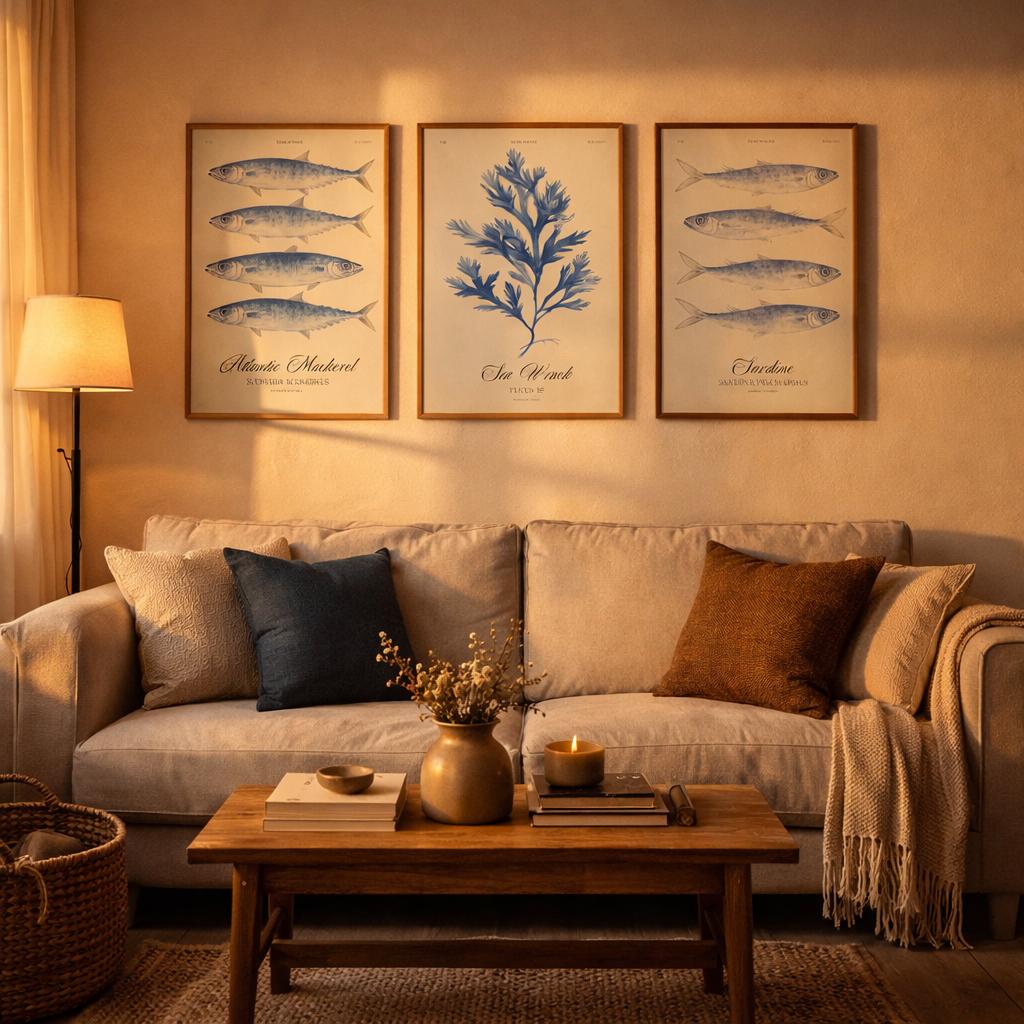
Pull one or two tones from your artwork and repeat them quietly throughout the space. If your print carries terracotta and olive, introduce those colours through a cushion or ceramic bowl. If it’s deep blue and sand, echo that in a throw or rug. This repetition creates harmony without obvious matching.
Consider Height and Proportion
Art should not float near the ceiling. Nor should it feel swallowed by furniture. The centre of a larger piece should sit roughly at eye level, usually around 145cm from the floor to the centre. Above a sofa, leave 15–25cm between the back of the sofa and the frame. These small details change how finished a room feels.
Create Gallery Walls With Structure
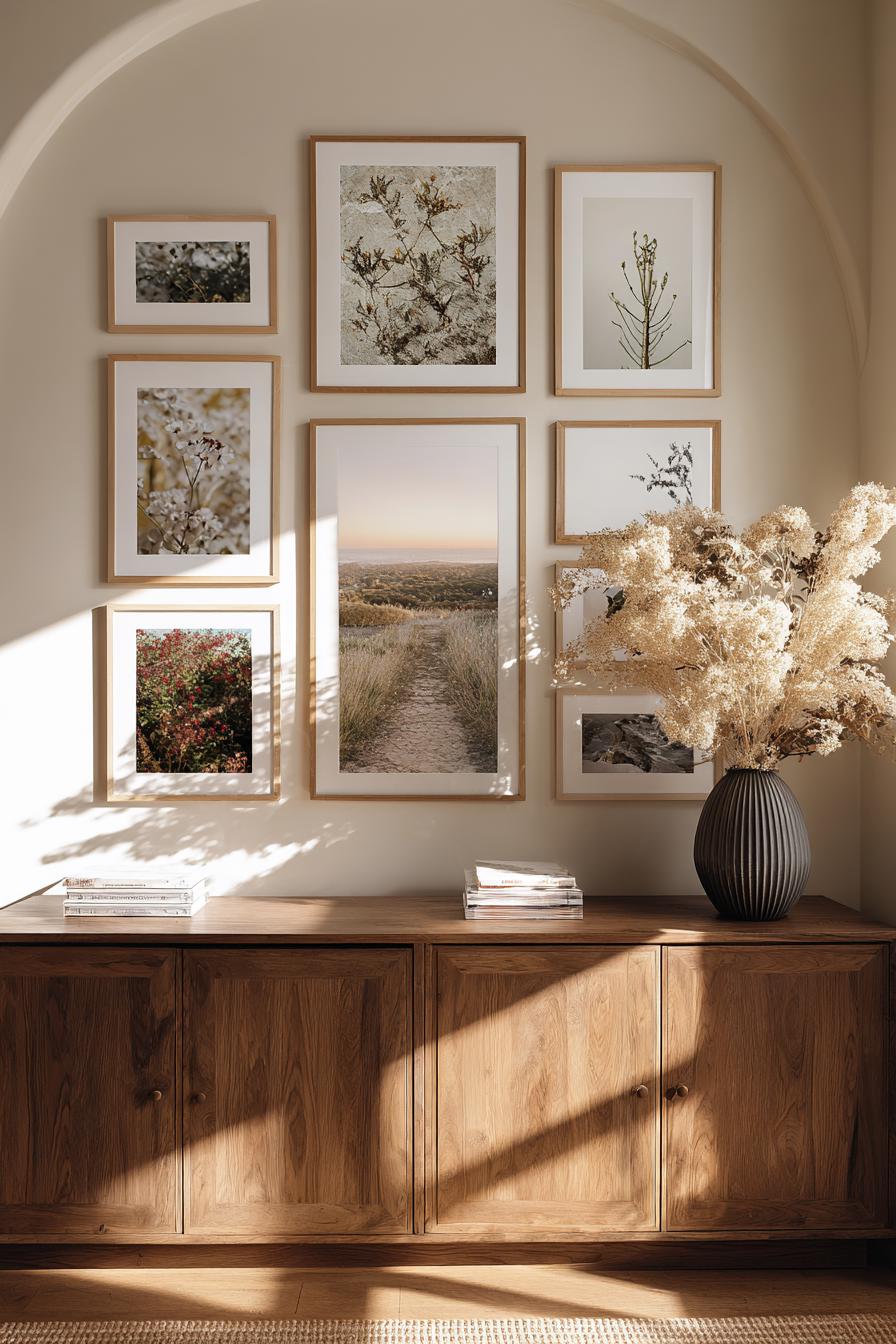
Gallery walls work beautifully when there’s a thread (whether colour, frame style, or subject matter). A botanical cluster. A portrait collection. A mid-century trio. Start with the largest piece and build outward. Keep spacing consistent (around 4–6cm between frames feels balanced). Restraint is what makes gallery walls look curated rather than chaotic.
Balance Drama With Simplicity
If your walls are dark (charcoal, forest green, navy) artwork becomes more dramatic. Fewer pieces, larger scale. If your walls are light and neutral, art can introduce depth and warmth. Living rooms work best when the art doesn’t compete with furniture, it completes it.
When the walls feel right, everything else follows.