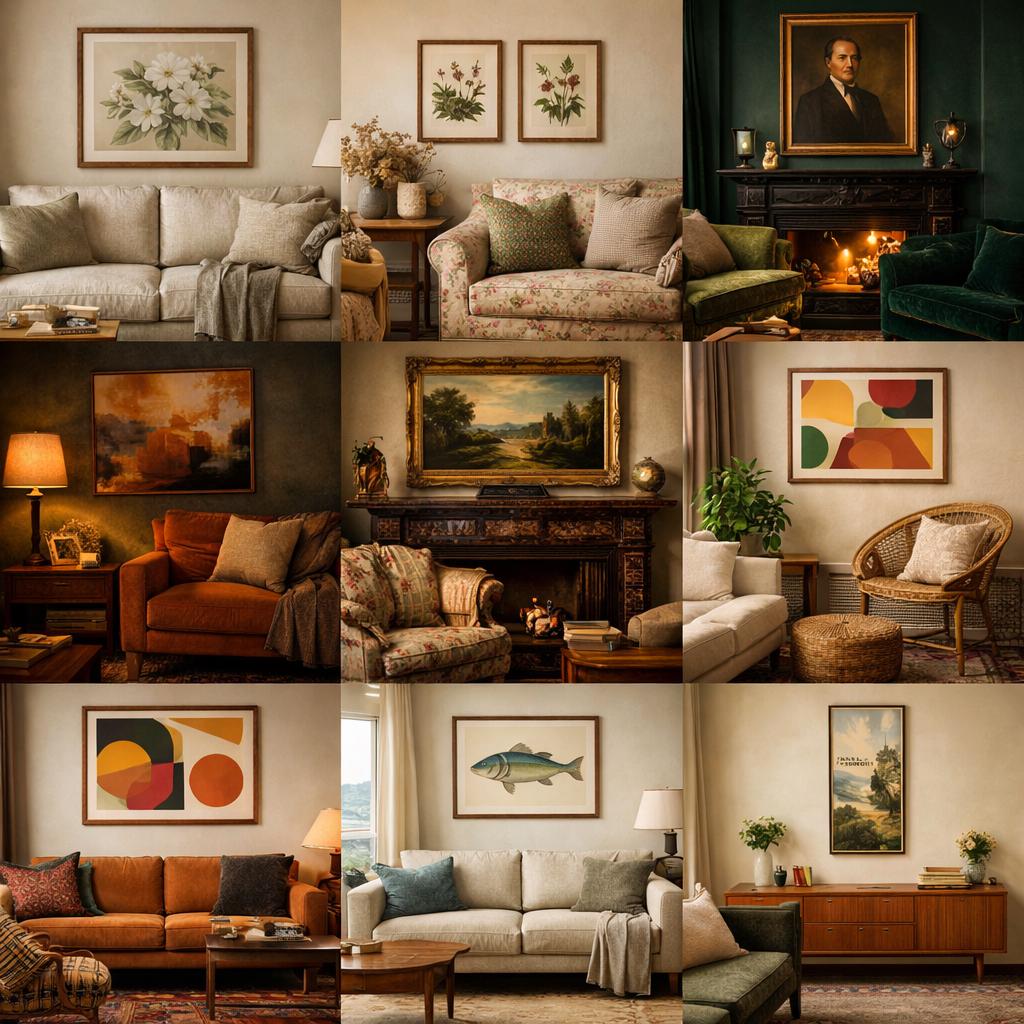
The living room is the room that tells the truth. It’s where you drink your coffee. Where you host. Where you quietly sit at 10pm with one lamp on and the rest of the house asleep. So when you decide to go vintage, this is where it matters.
The mistake people make? Thinking vintage is about furniture alone.
It isn’t. It’s about mood. And mood lives on the walls.
Here are eleven vintage living room styles that genuinely work and how the right wall art quietly pulls each one together.
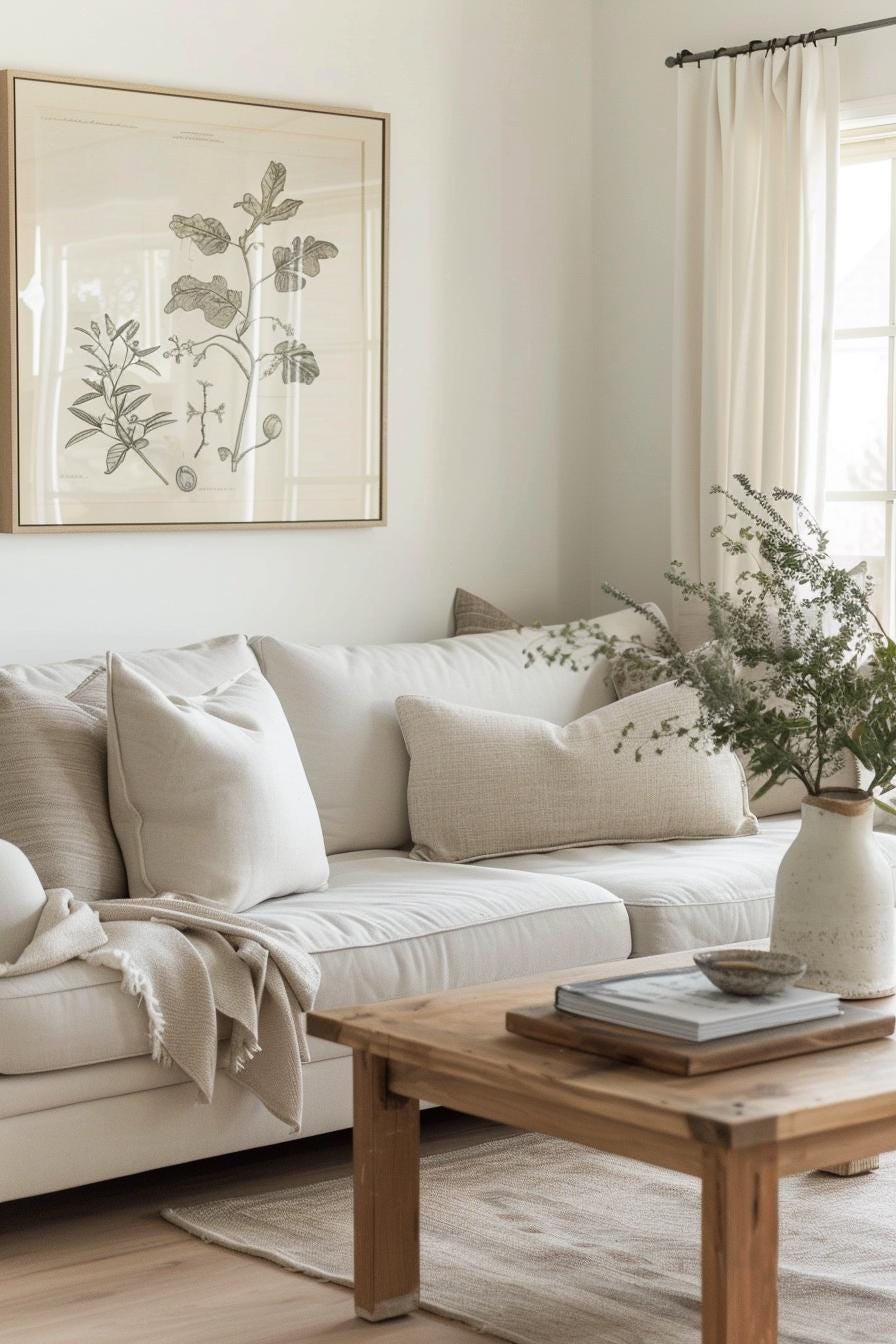
1. Modern Farmhouse
Modern farmhouse only works when it feels restrained. Linen sofas, soft neutrals, wood grain, natural textures, but never cluttered. The easiest way to keep it from drifting into “antique booth” territory is to anchor the room with one substantial piece of art. A botanical print. A soft landscape. A vintage-inspired illustration in a simple oak frame. When the walls feel considered, the rest of the room can breathe.
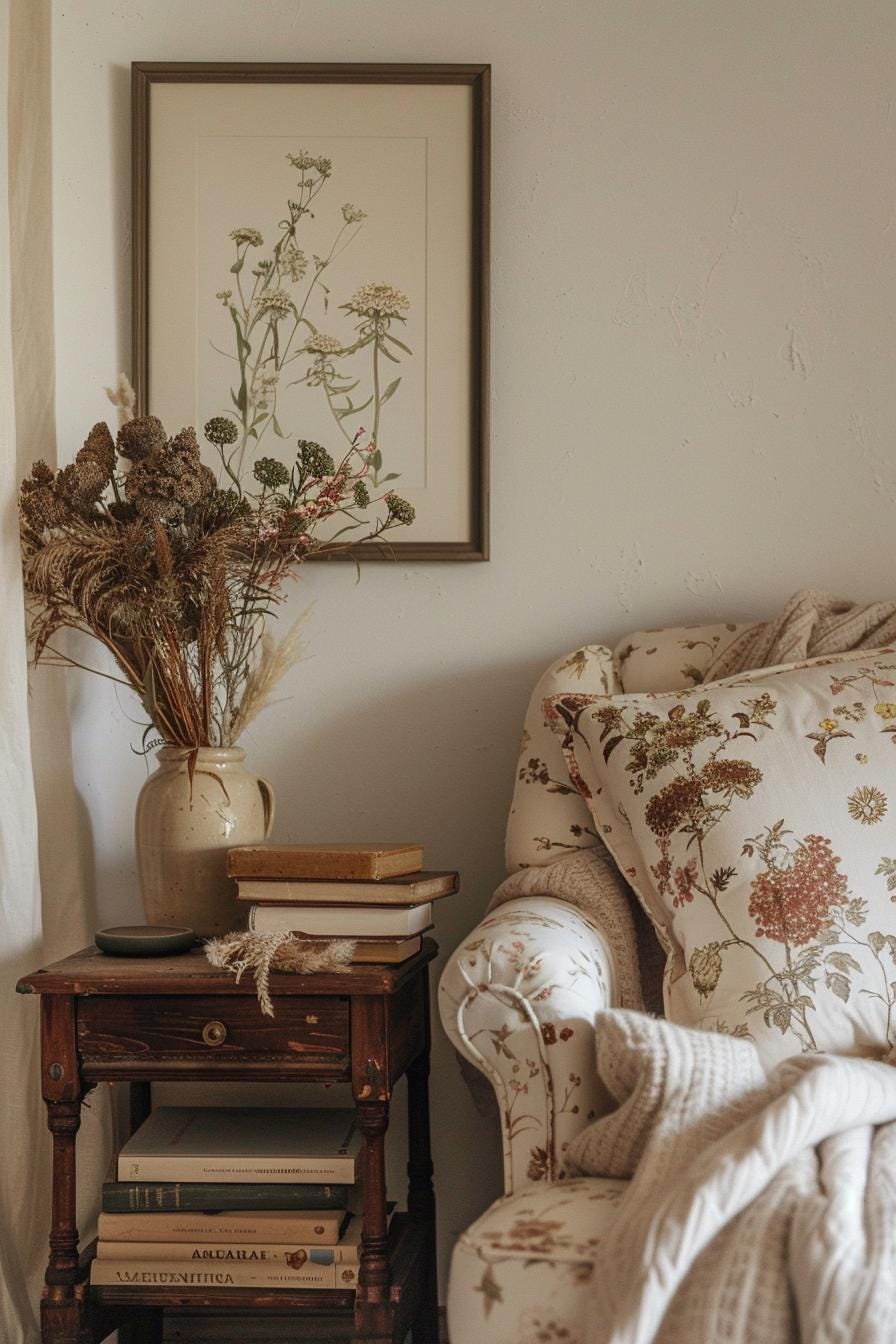
2. Cottagecore
Cottagecore should feel like the room exhaled. Floral armchairs. Stacked books. Dried flowers in whatever vessel is closest. The charm is in the layering, but without structure, it can become visually busy. That’s where art becomes essential. A pair of framed botanical prints or a softly coloured naturalist illustration gives the room a backbone. Something still and composed, against all that softness.
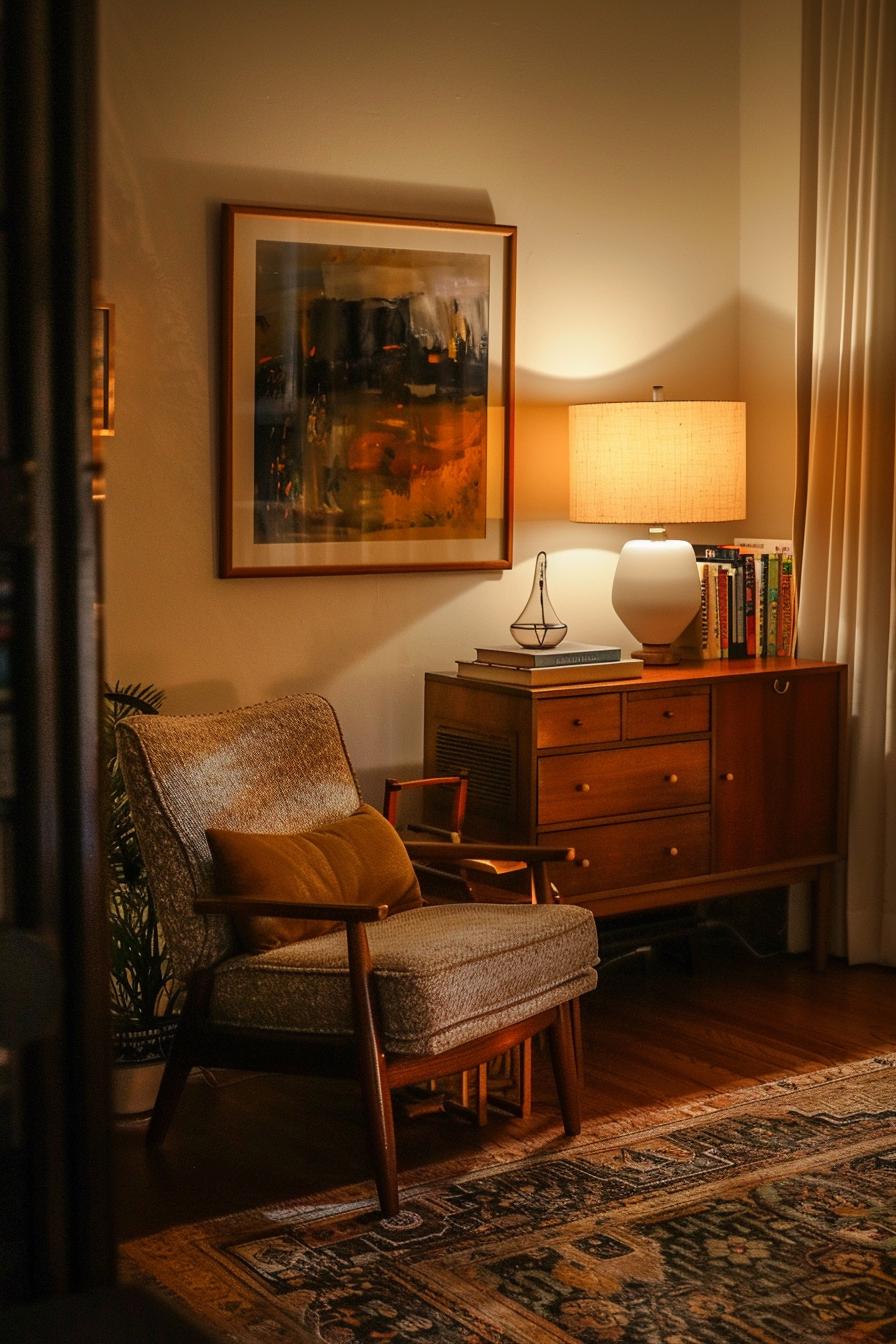
3. Cozy Vintage
Cozy isn’t a style. It’s a temperature. Warm lamps. Persian rugs. Deep seating you actually sink into. The key to making it feel authentic rather than styled is warmth, and that extends to what hangs on the wall. Earth-toned abstracts. Sepia coastal sketches. Mid-century graphics in ochre and brown. Art that echoes the warmth of the textiles makes the whole room feel wrapped.
4. Moody Vintage
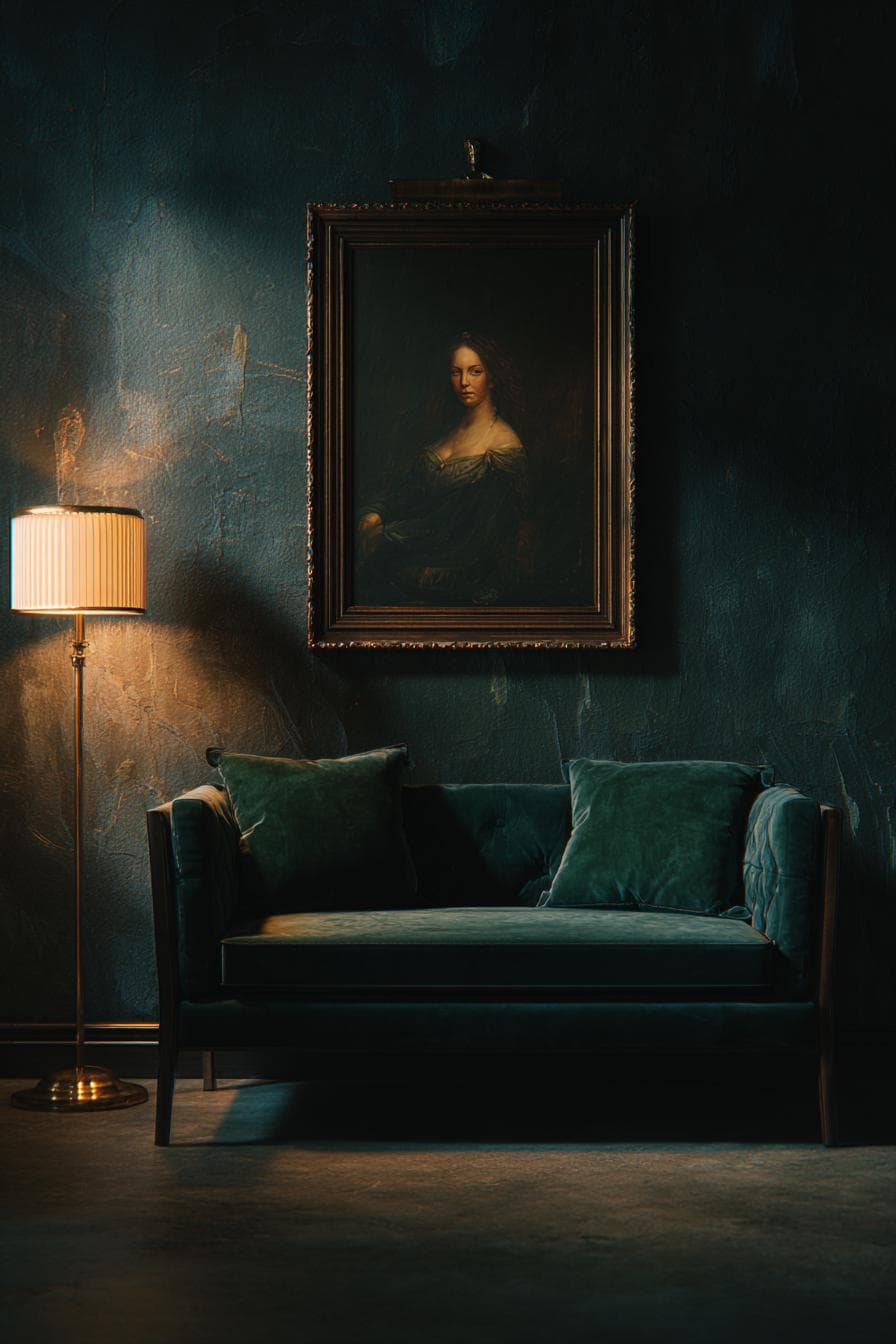
Moody living rooms aren’t loud, they’re confident. Deep green walls. Velvet. Brass. Heavy curtains that pool slightly at the floor. This is where art becomes dramatic. An oversized framed piece above the fireplace. A vintage-style oil portrait. A bold abstract in a dark palette. In moody rooms, fewer pieces have more power. One exceptional piece does more than a dozen small accessories ever could.
5. Victorian
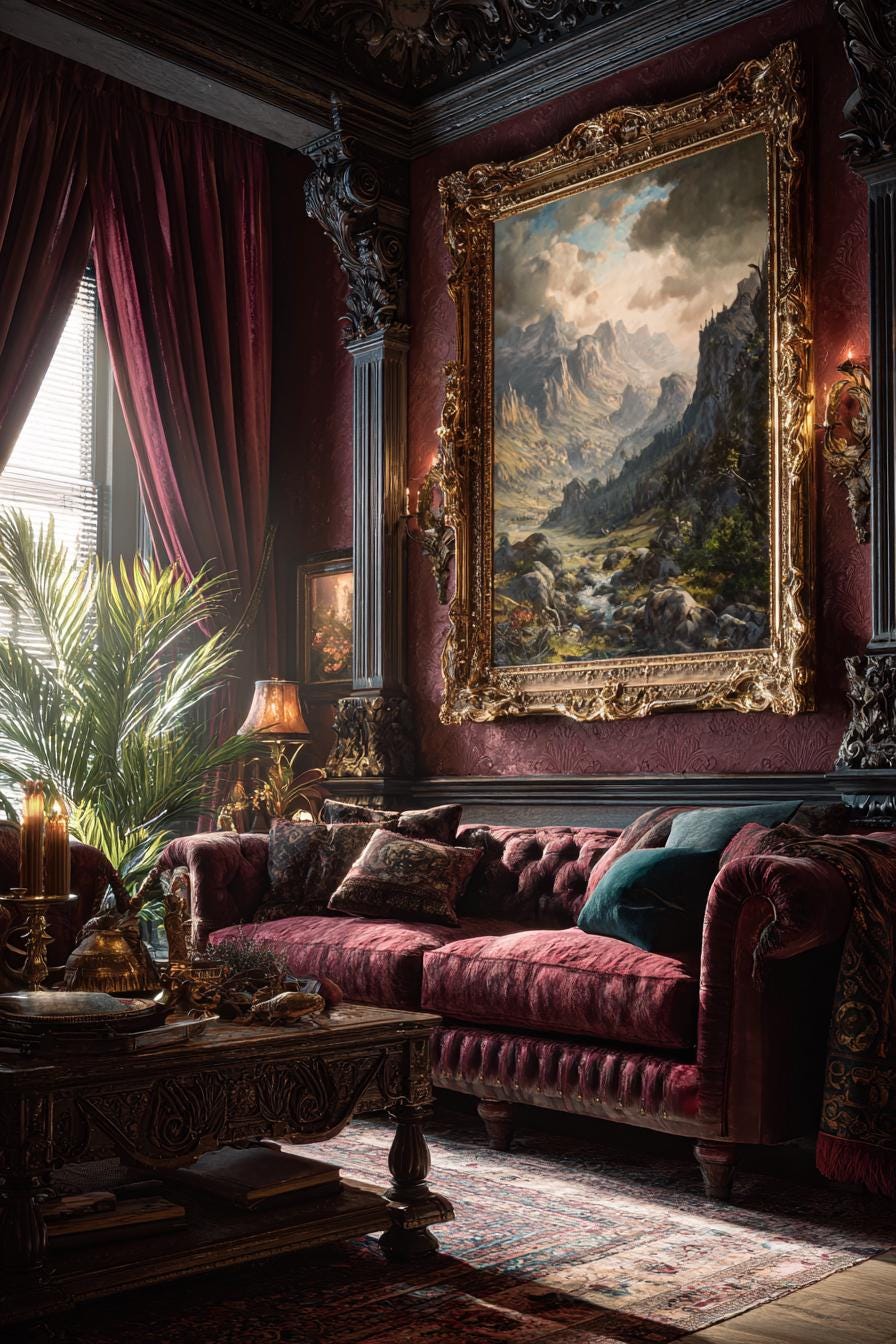
Victorian interiors are maximalism done carefully. Rich jewel tones. Ornate wood. Pattern layered on pattern. It works when the elements feel curated rather than crowded. Large-scale framed artwork is what keeps it elevated. A classical landscape. A vintage map. Something in an ornate frame that feels intentional. The walls are where Victorian rooms either collapse into chaos (or rise into drama).
6. Boho
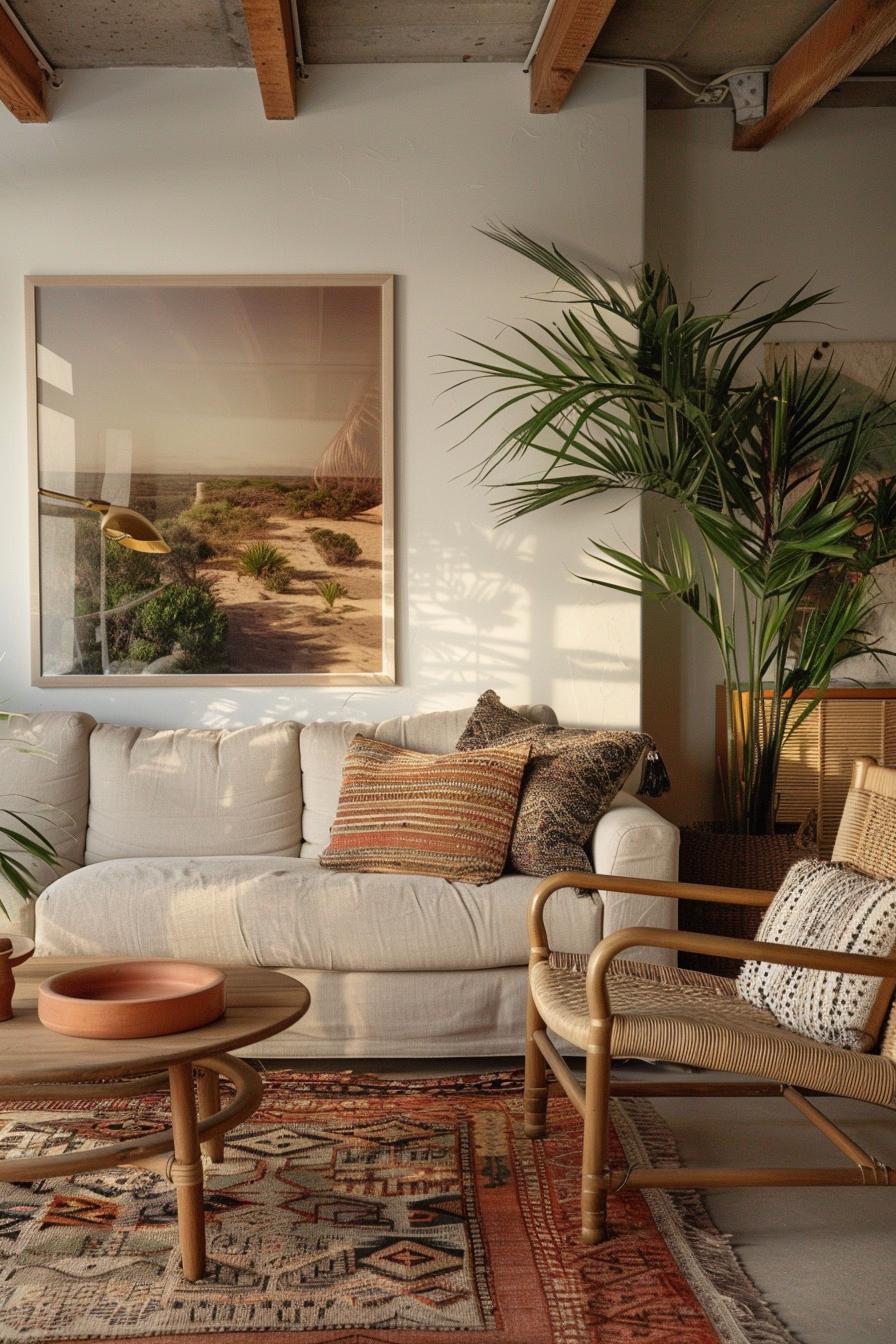
Boho isn’t random. It’s layered. Kilim rugs. Woven textures. Plants at different heights. Low seating and warm light. When the room is textured, the art should unify. A graphic mid-century print that picks up two or three of the colours in the room ties everything together. It gives the eye somewhere to land. Without that anchor, boho becomes clutter. With it, it becomes collected.
7. Eclectic
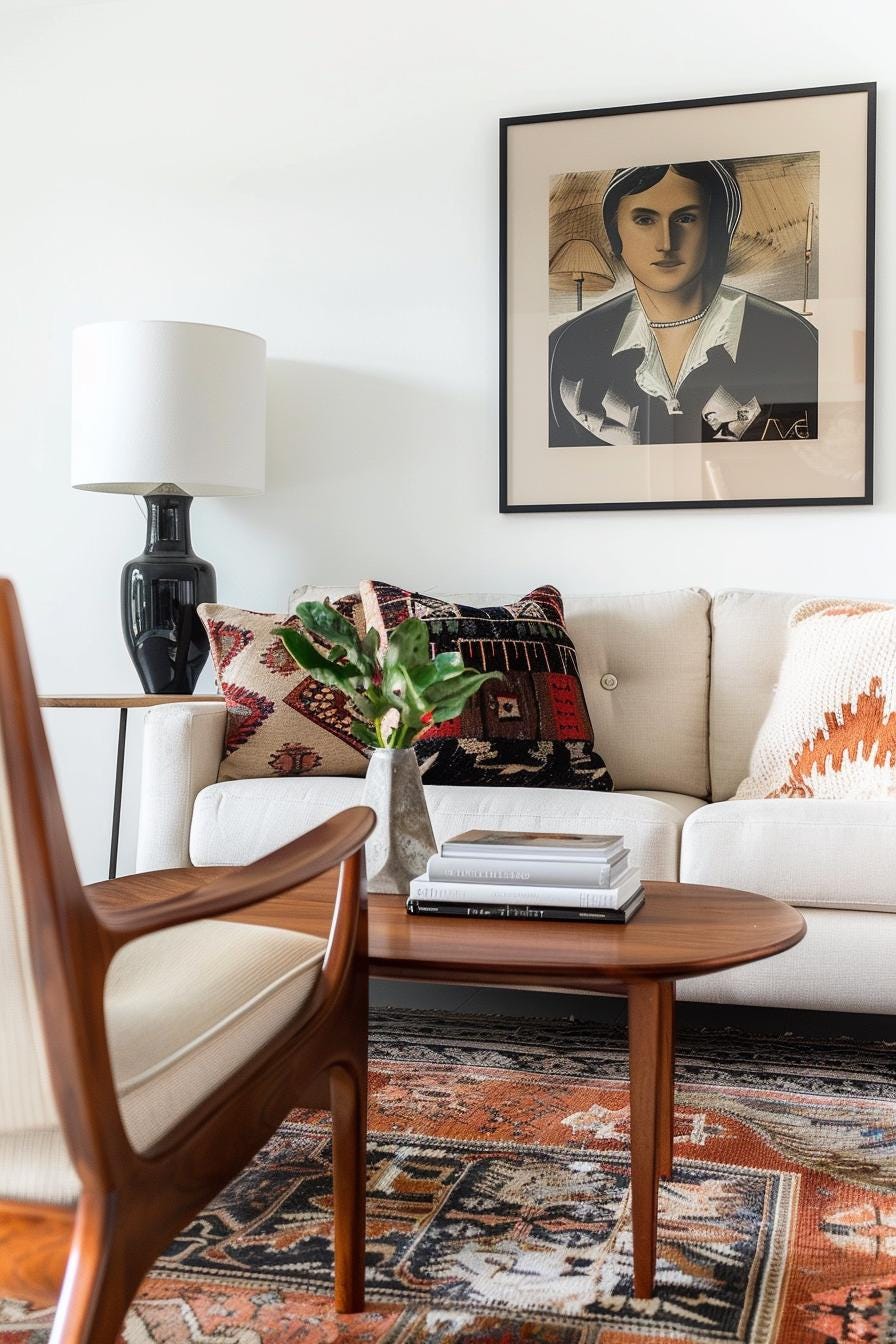
Eclectic living rooms are personal. A mid-century coffee table next to a Victorian chair. A 70s lamp beside a contemporary sofa. It works when there’s a thread. Often, that thread is colour, and art carries it. If your artwork shares a consistent palette or frame style, suddenly everything in the room feels related. Art is what makes eclectic look curated rather than accidental.
8. 70s Revival
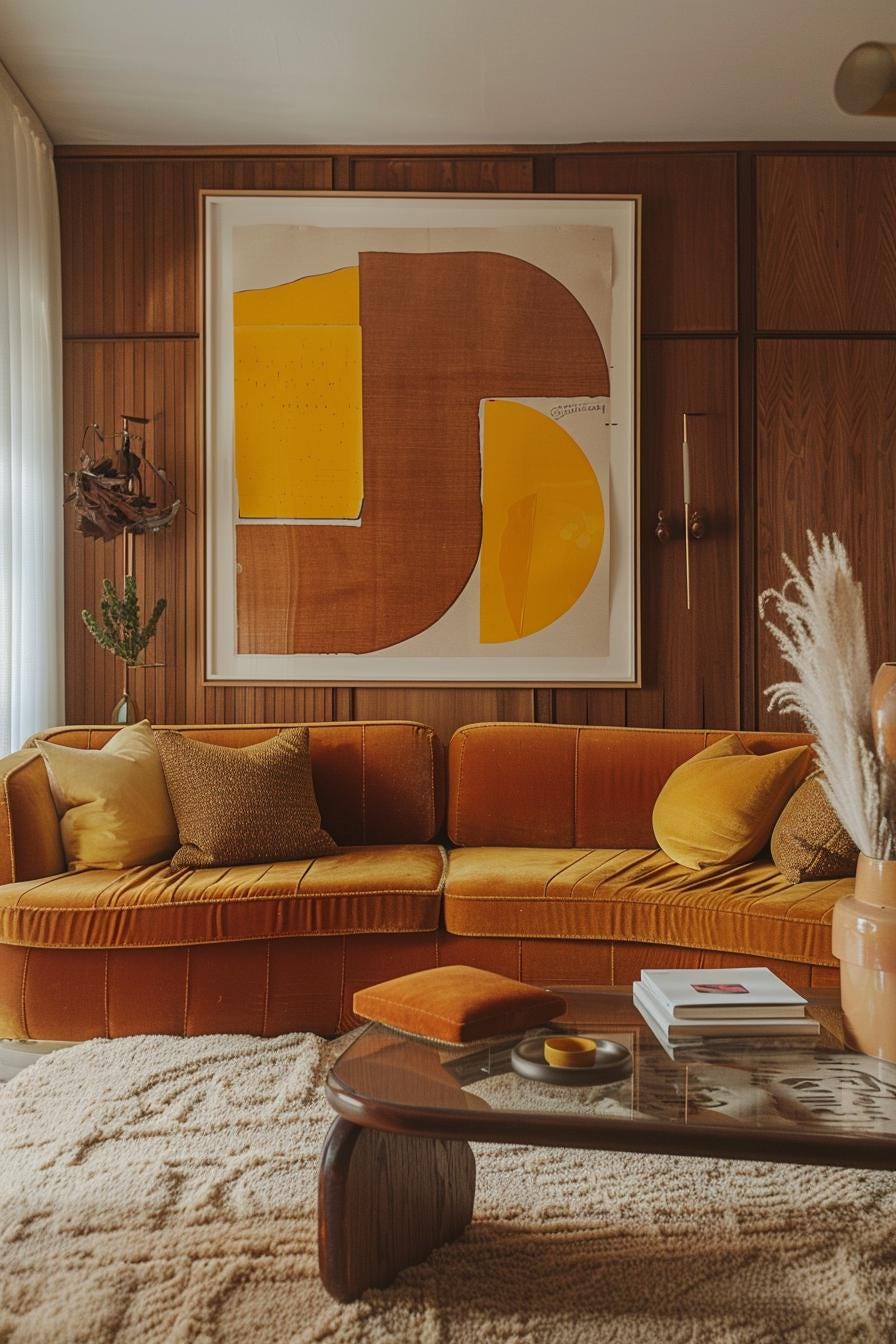
The 70s are back, but softer, smarter. Burnt orange. Mustard. Warm brown. Curves. Shag textures. The modern version starts with one statement: a bold abstract, a retro travel poster, a geometric print. You don’t need wood panelled walls to feel the era. A single framed piece can shift the entire room into that decade.
9. Coastal Vintage
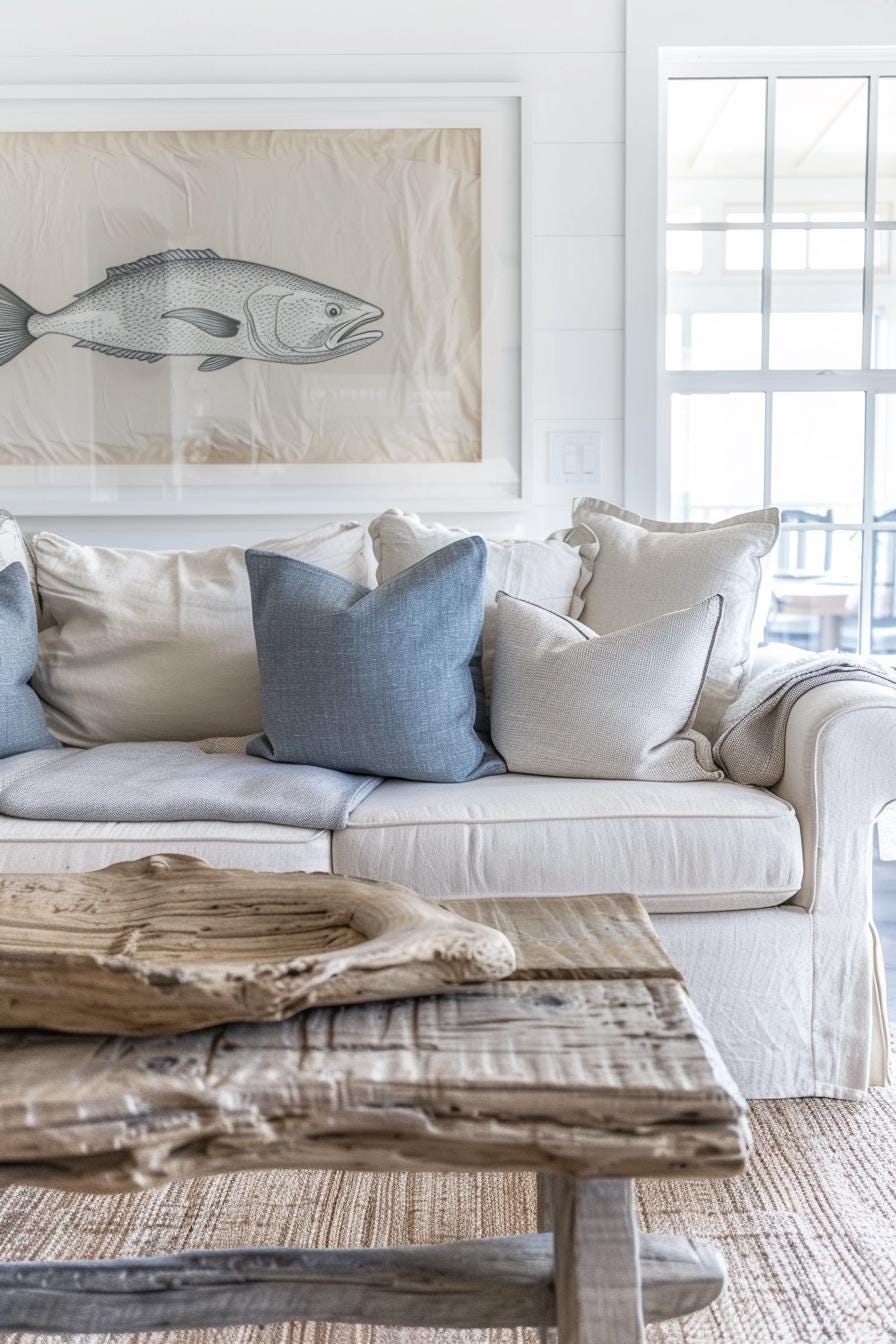
Coastal done well is tonal, not themed. Linen sofas. Driftwood textures. Glass in sea tones. Light. The right art is subtle: vintage nautical illustrations, fish studies, seaside prints in soft blues and sand hues. The goal isn’t to shout “beach.” It’s to feel like the air might carry salt.
10. Small Space Vintage
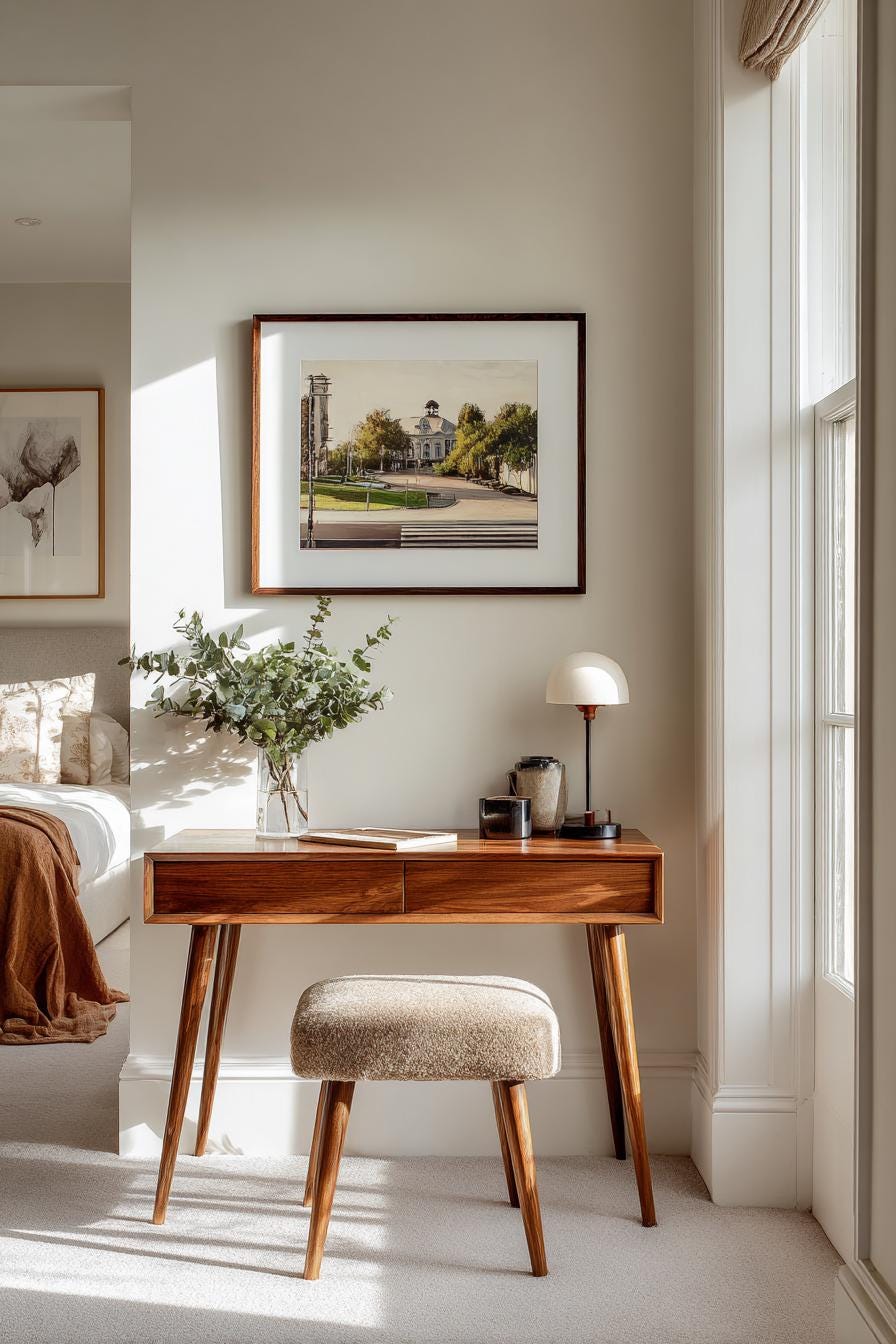
Vintage furniture was made for smaller rooms. Scaled pieces. Tapered legs. Lighter proportions. Wall art is even more important in compact spaces because it adds personality without taking up floor area. One vertical print above a slim console can define the entire room. Small rooms benefit from clarity (and art provides it).
11. Mid-Century Modern
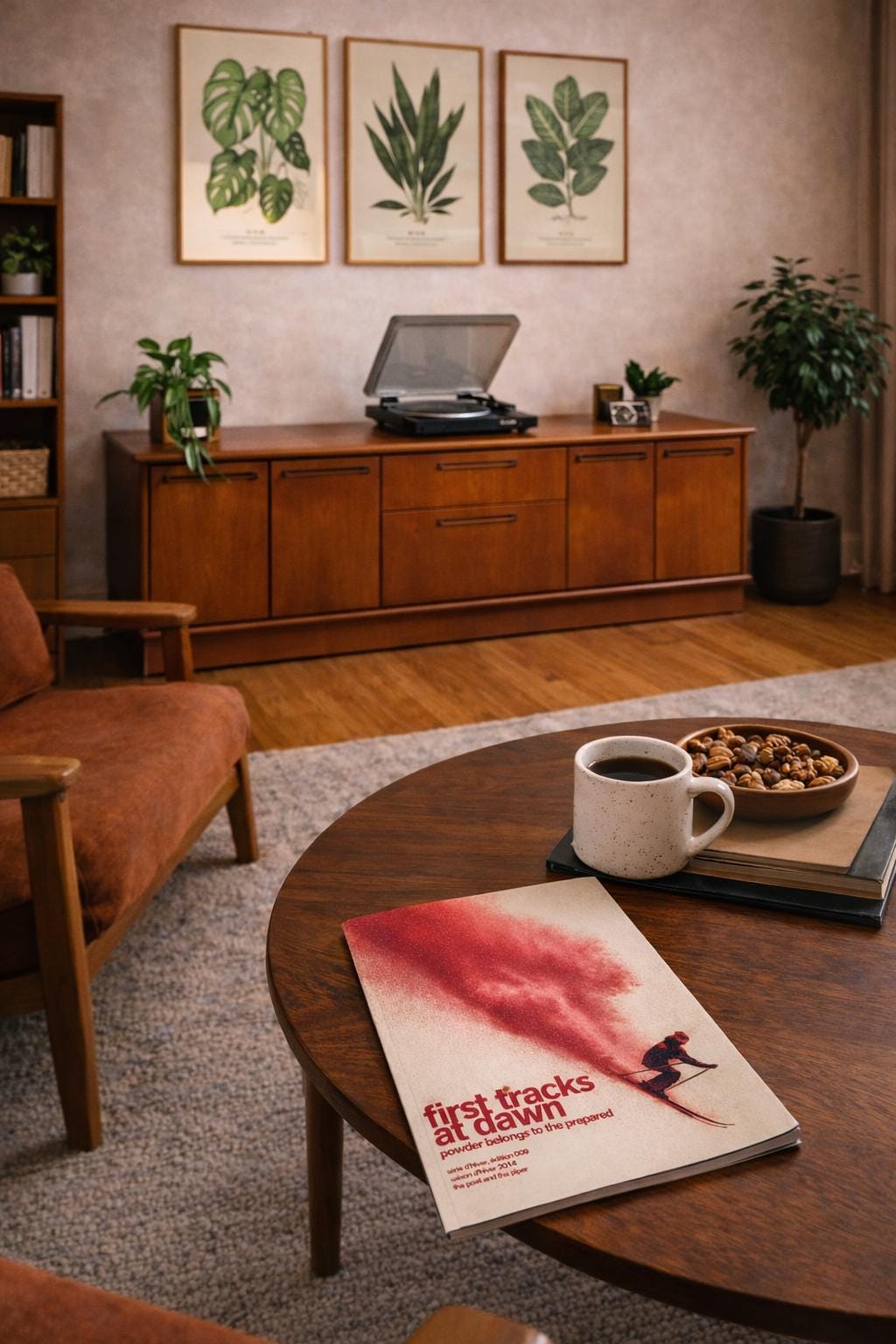
Mid-century modern isn’t about trends. It’s about proportion. Clean silhouettes. Teak or walnut tones. Cream walls. Everything considered. The artwork in an MCM room should feel deliberate. Graphic. Balanced. Strong composition. Retro travel posters. Abstract geometry. Naturalist prints with structure. In a mid-century living room, the art doesn’t compete. It completes.
The vintage living room that works is the one you want to sit in. Not the one that looks best in a photo. the one that feels like you live there. More often than not, that feeling starts with what you choose to hang on the wall.