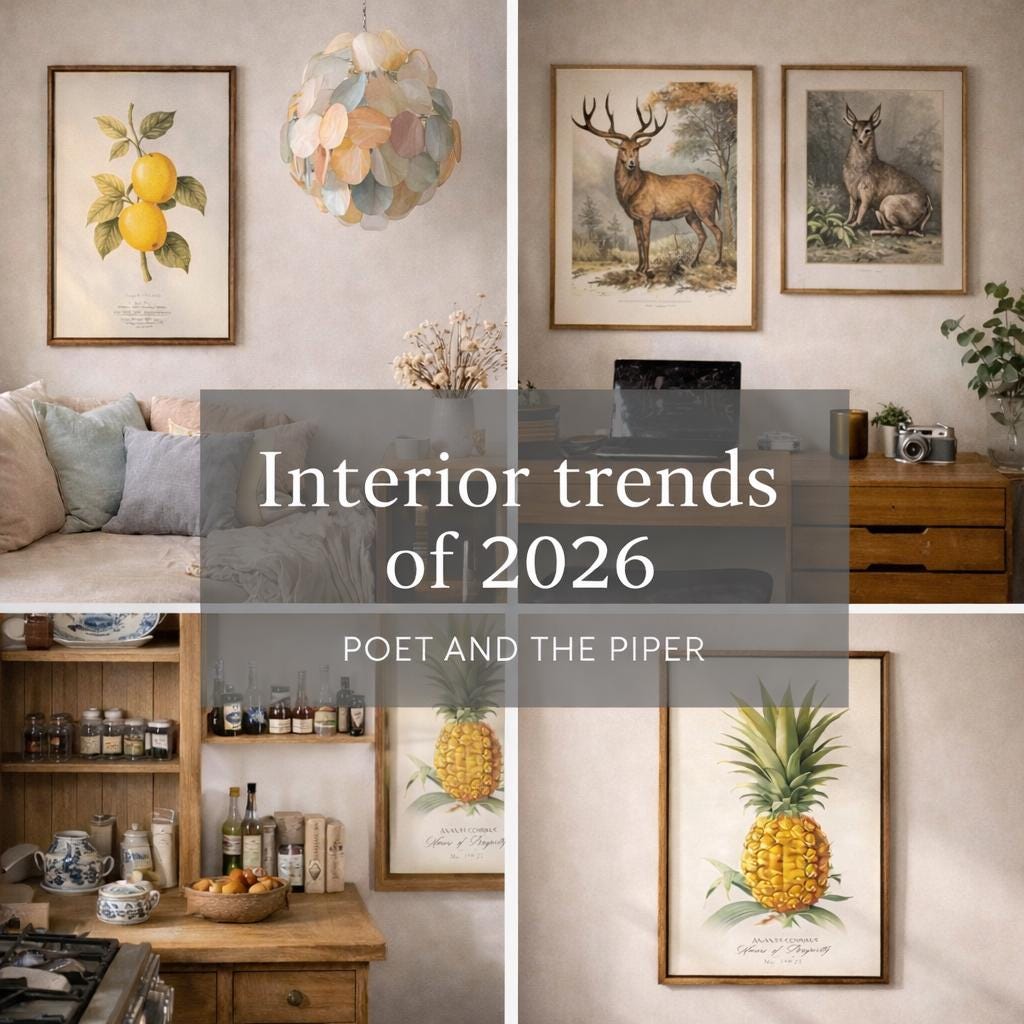
2026 is about character. Not clutter. Not maximalism for the sake of it. But pieces with story, texture and emotional weight.
Homes are becoming more personal. Less showroom. More layered. And that shift favours exactly the kind of pieces that feel collected rather than purchased all at once.
Here’s what’s shaping interiors in 2026 (and how to style it thoughtfully.)
1. The Botanist Returns
Nature isn’t a trend. But 2026 moves beyond houseplants and into archival botanicals, herbarium studies and naturalist prints. Large-scale leaf studies, vintage insect plates, and soft floral lithographs are appearing in kitchens, bedrooms and even bathrooms. Botanical artwork works because it brings organic form into structured interiors.
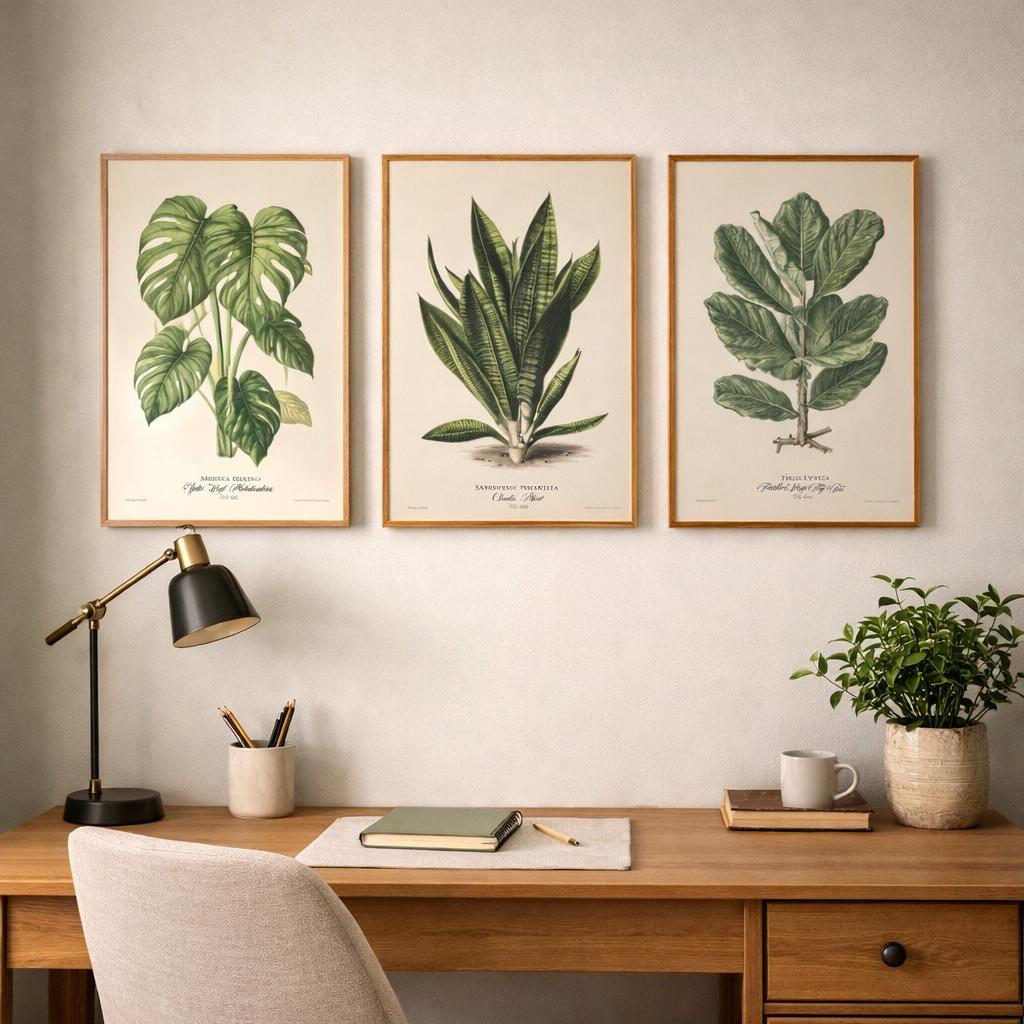
A trio of Poet and the Piper leaf studies (Monstera, Snake Plant, Fiddle Leaf Fig) above a desk softens a modern office. A vintage wildflower plate beside a bed feels calming without being childish. The key is restraint: oak frames, cream mounts, quiet walls.
2. Danish Brutalism (Warm Minimalism)
Brutalism is shedding its harshness. 2026 leans into what designers are calling “soft brutalism”, pale woods, sculptural stools, simple silhouettes. Think honest materials. Rounded oak stools. Functional forms. No excess ornament. This pairs beautifully with structured prints.
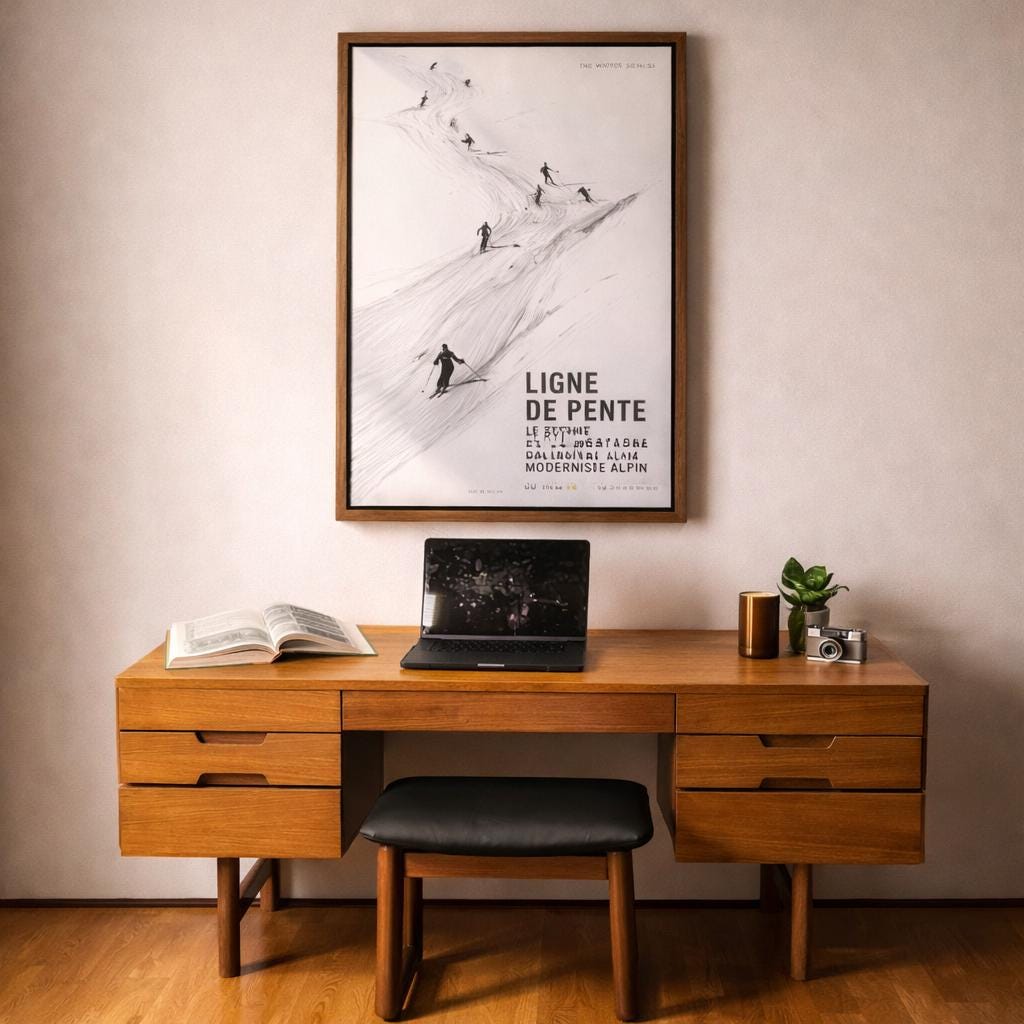
A mid-century abstract in a slim walnut frame above a simple oak console. A bold graphic ski print in a restrained space for contrast. Texture does the talking. Walls remain edited.
3. Japanese Minimalism with Depth
Japanese design influence continues, but with warmth. Low tables, negative space, emphasis on material quality. Art becomes intentional rather than decorative. One elongated botanical. One quiet landscape. One balanced naturalist plate.
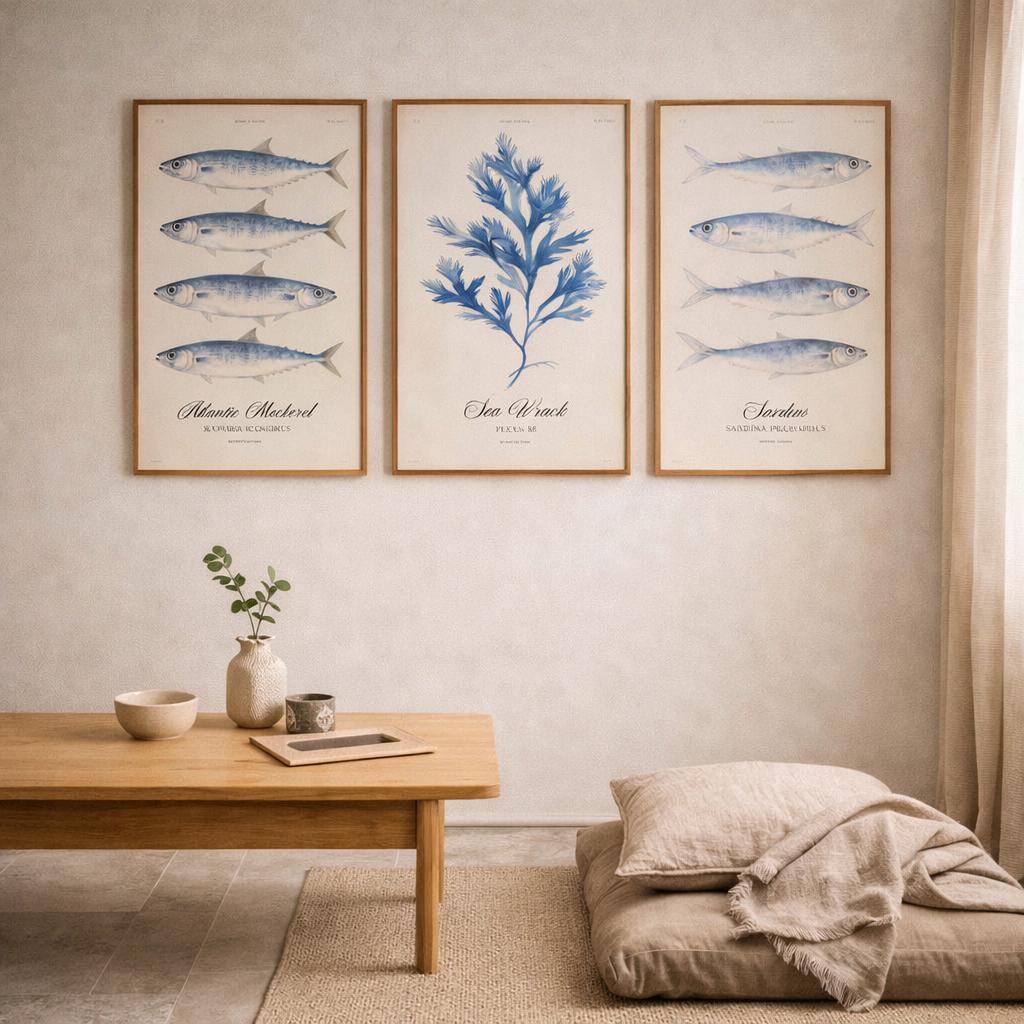
The Poet and the Piper’s subtle coastal studies or fish illustrations feel at home here, especially in pale rooms with linen, stone and soft wood. Scale matters. Fewer pieces. More breathing space.
4. Silver Menagerie
Metal accents are returning, but not chrome glare. Think sculptural silver vessels, animal forms, curated metallic objects. Pairing naturalist animal prints (stag, hare, fox) with antique silver creates a sense of collected elegance.
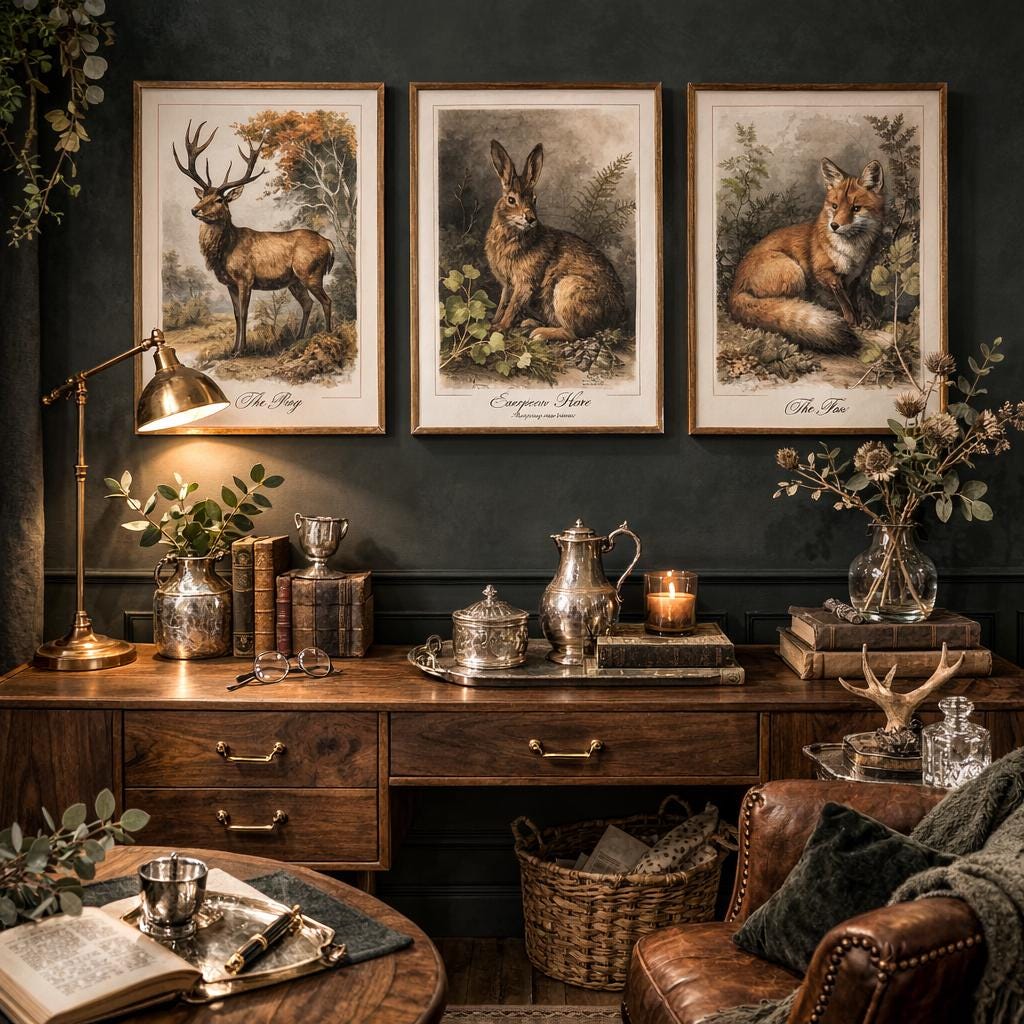
It feels heritage-inspired but not fussy. These interiors favour deeper walls (forest green, charcoal, navy) and warm lamp light. Art becomes grounding rather than decorative.
5. Return to Pastels (But Dustier)
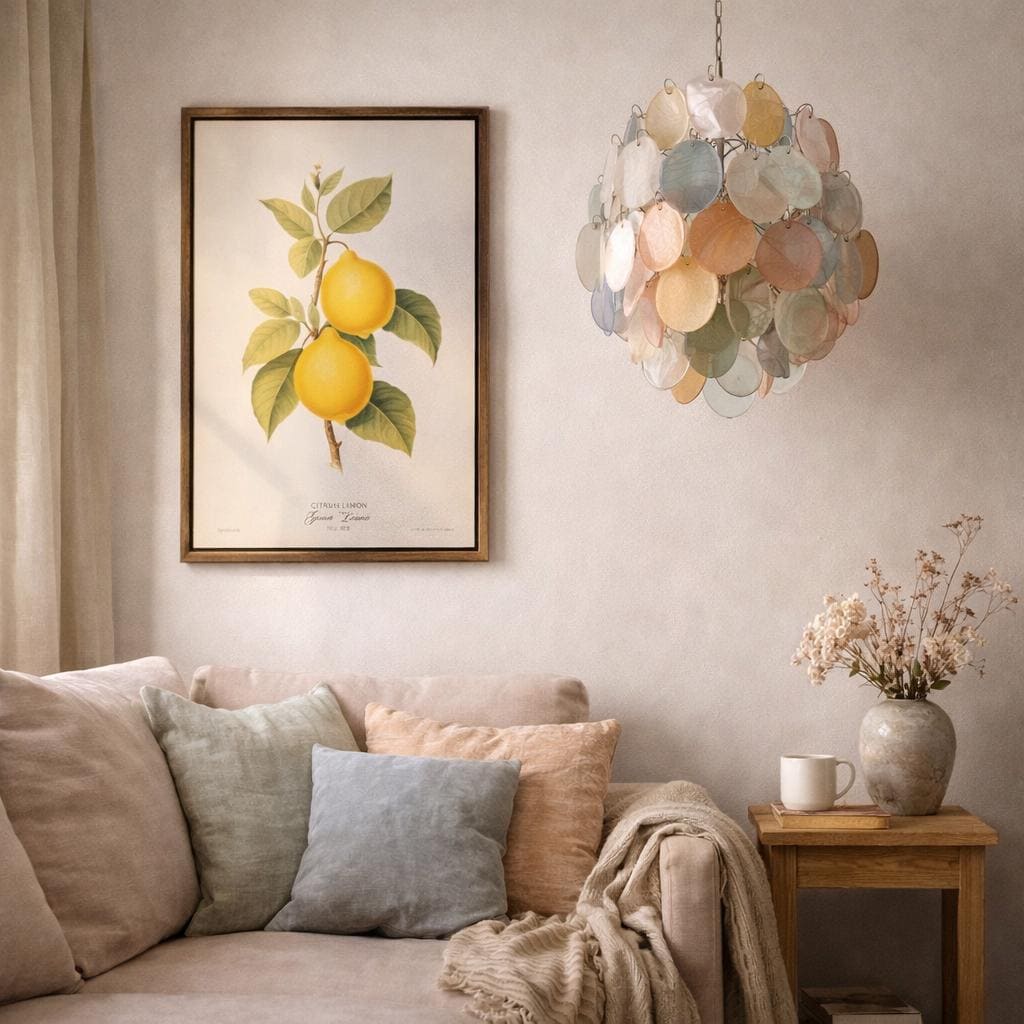
Pastels in 2026 are not sugary. They’re muted. Chalky. Layered. Blush, soft sage, faded blue and gentle peach are appearing in textiles and lighting. Pastel glass lighting paired with botanical prints creates softness without losing structure.
6. Displaying the Delft
Open shelving is shifting away from mass-produced styling towards curated ceramics. Antique plates. Delft blues. Rustic wood hutches. Art supports rather than competes. Slim vertical coastal prints beside a dresser.
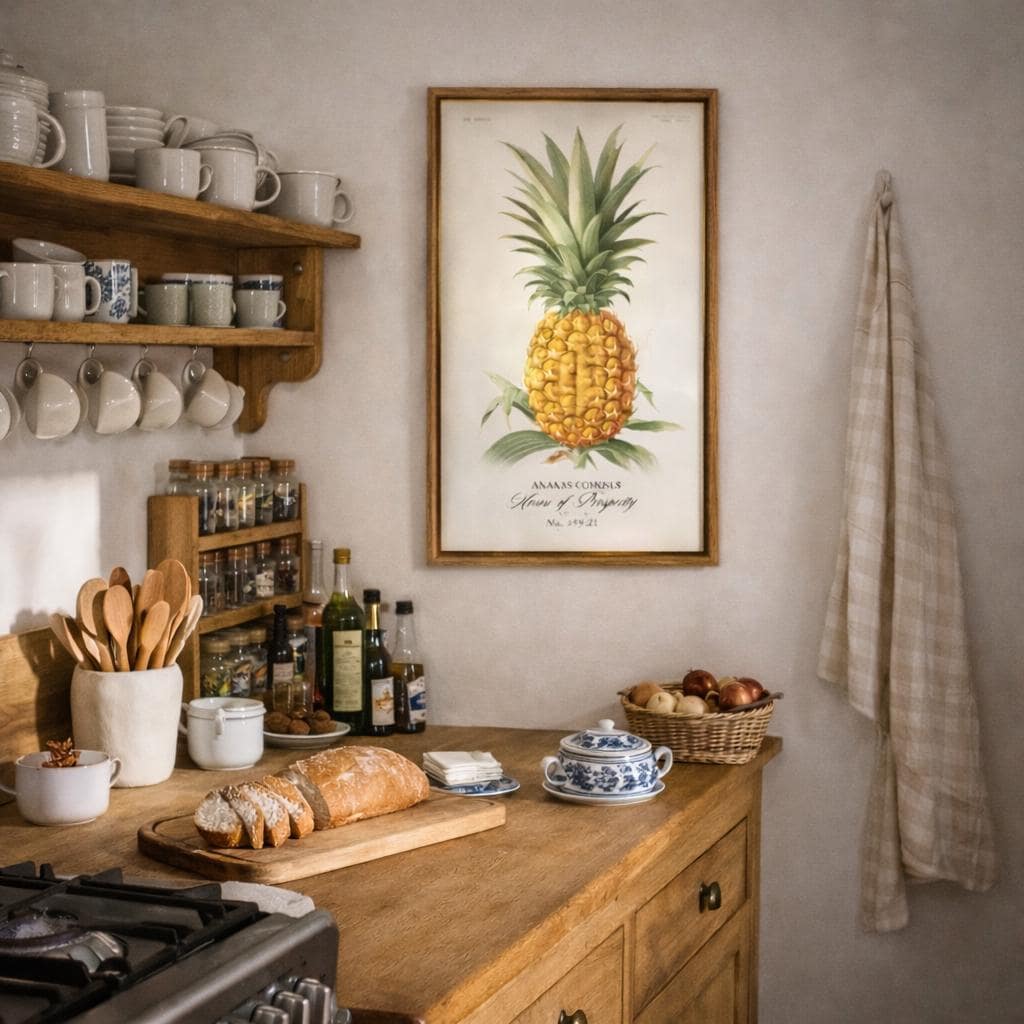
A framed pineapple botanical in a kitchen layered against stacked plates. Blue and white ceramics paired with marine illustrations feel particularly relevant this year.
7. Off-Season Nautical
Coastal is no longer summer-only. 2026 embraces “off-season nautical” (shell mirrors, marine studies, weathered woods). But styled thoughtfully. Not themed.
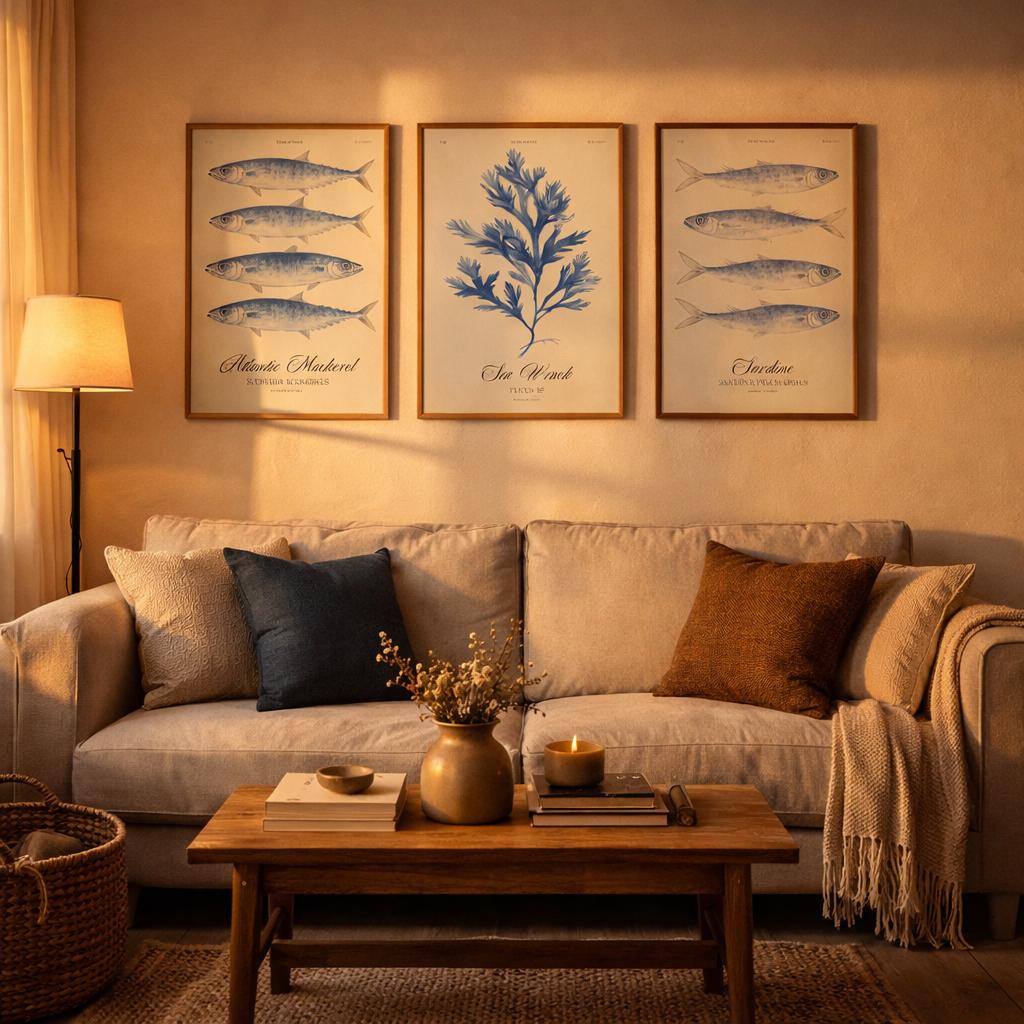
Poet and the Piper sardine, mackerel and seaweed prints look elevated when framed in oak and hung against soft stone or pale grey walls. Pair with woven textures and aged brass rather than rope and anchors.
The Thread Running Through 2026
Every trend shares one common principle: permanence. Homes are moving away from disposable styling and towards pieces that feel archival.
Art that could have been found in a European study. A coastal cottage. A mid-century townhouse. Framing matters more. Lighting matters more. And above all ... restraint wins. 2026 isn’t about adding more.
It’s about choosing better.